
Door-to-Door Shipping From China To The World
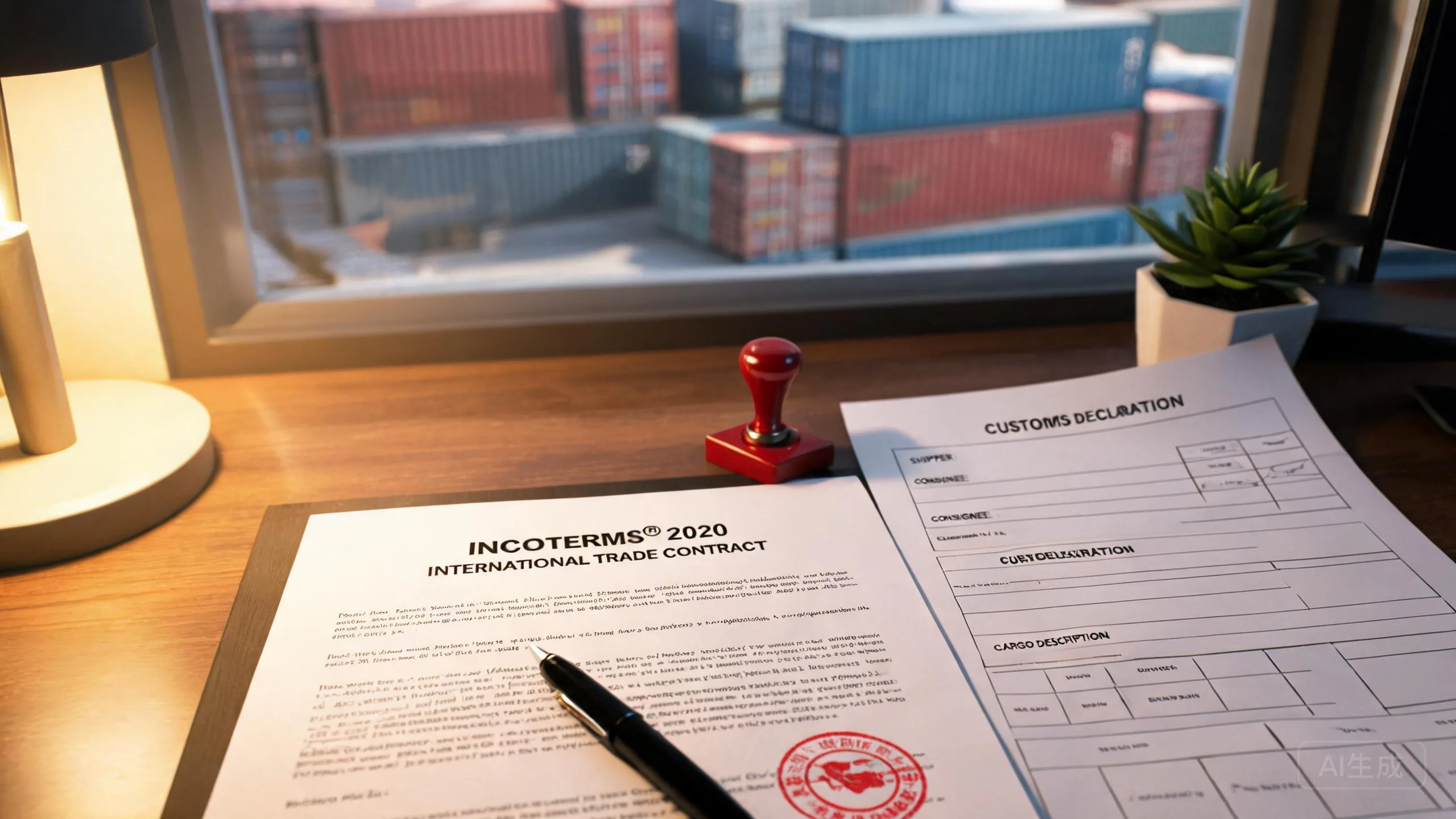
Quick answer: Before an ocean container is loaded onto a vessel bound for the US, EU, Canada or several other destinations, customs authorities require cargo data to be transmitted in advance of loading — not at arrival. In the US this is the ISF 10+2 rule: the importer (or its agent, usually the freight forwarder or customs broker) files 10 data elements, and the carrier files 2, generally no later than 24 hours before the cargo is laden aboard the vessel. The EU equivalent is the ENS (Entry Summary Declaration) under the Union Customs Code and ICS2; Canada uses ACI eManifest; the US carrier-side manifest is AMS. The exact deadline, data set, filing party and enforcement practice differ by destination. Do not assume a DDP booking transfers filing responsibility away from the importer of record — and always verify the current rules with the destination authority or a licensed broker, because filing windows, ICS2 release scope and penalty schedules change.
This is a planning comparison, not legal advice. Deadlines and data sets are the commonly cited baseline rules for ocean container cargo; confirm current requirements for your lane.
| Regime | Destination | Common name | Typically filed by | Typical timing | Core purpose |
|---|---|---|---|---|---|
| ISF 10+2 | United States | Importer Security Filing | Importer of record, or its agent (forwarder / broker) | Generally no later than 24 hours before lading | Security risk assessment before loading |
| AMS | United States | Automated Manifest System (carrier manifest) | Ocean carrier / NVOCC | Before lading; carrier-side | Carrier manifest and "+2" elements |
| ENS / ICS2 | European Union | Entry Summary Declaration | Carrier, or in some cases the forwarder / filer | Generally at least 24 hours before loading for ocean containers | EU safety & security pre-arrival screening |
| ACI eManifest | Canada | Advance Commercial Information | Carrier / forwarder per CBSA rules | Advance of loading / arrival by mode | CBSA pre-arrival risk assessment |
| ACI / ACID | Egypt | Advance Cargo Information registration | Importer / exporter via the national platform | Before shipment; ACID must appear on documents | Pre-registration of shipment data |
| Other national schemes | Various | e.g. advance manifest / pre-arrival declarations | Varies | Varies | Local security screening |
How to read this: the acronyms are not synonyms, and they are not interchangeable. A shipment from Shenzhen to Los Angeles involves both ISF and AMS. A shipment to Rotterdam involves ENS, not ISF. A shipment to Egypt involves the ACID workflow, which is a registration step that must be reflected on the bill of lading and other documents.
The US Importer Security Filing rule is often called "10+2" because of its structure:
The 10 importer-side elements (filed by the importer of record or its agent):
| # | Data element | Typical source of truth |
|---|---|---|
| 1 | Seller name and address | Commercial invoice / supplier master data |
| 2 | Buyer name and address | Sales contract / purchase order |
| 3 | Importer of record number / FTZ applicant identification | Importer's CBP-assigned number |
| 4 | Consignee number(s) | Delivery party details |
| 5 | Manufacturer (or supplier) name and address | Factory information — often the weakest link |
| 6 | Ship-to party | Final delivery location, especially for FBA / 3PL |
| 7 | Country of origin | Origin determination, not just port of loading |
| 8 | HTSUS number (commonly at 6-digit level for ISF) | Product classification |
| 9 | Container stuffing location | Where the container was physically packed |
| 10 | Consolidator / stuffer name and address | Warehouse or consolidator details |
The +2 carrier-side elements: the vessel stow plan and container status messages. These are the carrier's obligation, not the importer's.
Two practical consequences follow. First, the importer's 10 elements depend on data that often sits with a Chinese factory or a consolidation warehouse — manufacturer name, stuffing location, consolidator — so a forwarder needs that information before the filing window closes, not after the container is gated in. Second, the HTS number used for ISF should be consistent with the classification used on the entry; a mismatch is a classic trigger for a hold or a request for clarification.
| Scenario | Who normally files the importer-side data | Who carries the legal responsibility | What must be agreed in writing |
|---|---|---|---|
| Importer has its own US broker | The broker | Importer of record | Data hand-off timing and accuracy |
| DDP shipment arranged by a China forwarder | Forwarder's US agent / broker on the importer's behalf | Still the importer of record (or the party contractually assuming it) | Who supplies IOR number, who pays penalties, who corrects a rejected filing |
| Amazon FBA inbound | Forwarder or designated broker | Importer of record (often the seller) | Ship-to party and FBA warehouse details must be correct |
| NVOCC issuing a House B/L | NVOCC may file master/house-level data | Depends on the filing role and contract | House vs master data consistency |
The critical point: Incoterms describe cost and risk allocation between buyer and seller; they do not, by themselves, change who is the importer of record or who is legally answerable for a security filing. Under DDP the seller may arrange and pay for the filing, but the destination authority still looks to the importer of record. Put the allocation of filing duties, data supply and penalty risk into the sales contract or the forwarder's service agreement rather than assuming the trade term covers it.
For ocean container cargo, the commonly cited US baseline is that ISF must be filed no later than 24 hours before the cargo is laden aboard the vessel at the foreign port. Several elements may be updated later under flexible provisions, but relying on that flexibility is poor practice: the practical cut-off is usually earlier, because the forwarder needs the complete data set, a valid importer number and an accepted transmission before load.
Operationally, work backwards from the vessel's planned loading window at the Chinese port:
| Milestone | Why it matters |
|---|---|
| Booking confirmed | ETD and vessel identified; filing clock starts to matter |
| Cargo details finalised (cartons, weights, CBM, HS code) | Feeds HTS, origin, ship-to and stuffing data |
| Factory / supplier identity and stuffing location confirmed | Elements 5, 9 and 10 — frequently missing |
| Consolidation / container stuffing completed | Stuffing location and consolidator become fixed |
| Advance filing transmitted and accepted | A rejection must be corrected before loading |
| Container gated in and loaded | Too late to file if nothing was transmitted |
| Destination arrival and entry filing | Separate customs clearance step; not a substitute for ISF |
For the EU, ENS under the Union Customs Code / ICS2 follows the same "before loading" logic for ocean containers, with the data set and filer depending on the ICS2 release scope and the transport scenario. Because ICS2 has been rolled out in phases, confirm which release and which data set apply to your lane at the time of booking.
Penalty schedules are set by each authority and change; the figures commonly cited in industry guidance for ISF violations are in the thousands of US dollars per violation, with higher exposure for repeated or uncorrected non-compliance. Treat any specific number as illustrative and verify current CBP guidance rather than quoting it in a contract.
The real cost is usually operational, not the fine:
These downstream costs are why advance filing belongs in the booking checklist rather than in a post-departure cleanup.
Work through these questions for every China-origin ocean booking.
| Step | Question | Action if the answer is unclear |
|---|---|---|
| 1 | What is the destination customs regime (ISF / ENS / ACI / other)? | Confirm with the forwarder before booking; do not assume the last lane's rules apply |
| 2 | Who is the importer of record, and is their number valid? | Resolve before data transmission; a wrong IOR number means a rejected filing |
| 3 | Who files the importer-side data, and through which broker? | Name the filing party in writing |
| 4 | Are manufacturer, stuffing location and consolidator known? | Collect from the factory / warehouse before the cut-off |
| 5 | Is the HTS / commodity code consistent across ISF, invoice and entry? | Pre-classify and document the decision |
| 6 | Does the shipment go to an FBA warehouse or third-party DC? | Verify ship-to party and consignee data |
| 7 | Is the trade term DDP/DAP? | Add explicit clauses on filing duty, data supply and penalty allocation |
| 8 | Is there a destination-specific registration (e.g. Egypt ACID)? | Complete it before B/L issuance; the number must appear on documents |
| 9 | What is the fallback if a filing is rejected? | Agree escalation and whether cargo can be held at origin |
Example 1 — Shenzhen to Los Angeles, 40HQ, DDP, first-time importer. The seller arranges DDP and assumes "the forwarder handles everything". But ISF needs the buyer's importer of record number, the factory's legal name and the container stuffing location. If the buyer has no IOR number or the factory name is a trading-company alias, the filing cannot be completed cleanly. The fix is a pre-booking data sheet and a written allocation of who supplies each of the 10 elements.
Example 2 — Ningbo to Rotterdam, LCL consolidation. There is no ISF. The relevant obligation is ENS under ICS2, filed at the appropriate level for the transport scenario. A consolidator handling multiple shippers must have complete and accurate data for each consignment before the container is loaded. Treating this as "the carrier's problem" and shipping without verified data is how LCL groups get held.
Example 3 — China to Egypt, FCL. The destination ACI workflow requires the shipment to be registered in advance and an ACID number to appear on the bill of lading and related documents. This is a separate pre-registration step, not an ISF or an ENS. B/L issuance without the number creates a document mismatch at destination.
Example 4 — Amazon FBA inbound, multiple suppliers consolidated in Shenzhen. One container, many SKUs and several factories. The ISF "manufacturer" and "ship-to party" fields must represent the actual supply chain and the actual FBA destination. Consolidation adds a data layer: the consolidator/stuffer details must be captured at the warehouse, not reconstructed after sailing.
Q: 1. What is ISF 10+2?
A US security filing for ocean cargo: 10 data elements from the importer (or its agent) plus 2 from the carrier (vessel stow plan and container status messages), submitted before the goods are loaded onto the vessel.
Q: 2. Who is responsible for filing ISF?
Legally the importer of record. In practice a licensed customs broker or the freight forwarder's agent files on the importer's behalf. The importer remains answerable for accuracy and timeliness.
Q: 3. What is the ISF deadline?
The commonly cited baseline is no later than 24 hours before the cargo is laden aboard the vessel at the foreign port. Work to an earlier internal cut-off, because the filing must be accepted, not merely transmitted.
Q: 4. What is the difference between ISF and AMS?
ISF is the importer-side security data set. AMS is the US carrier-side automated manifest system through which the carrier (or NVOCC) transmits manifest and the "+2" elements. Both apply to US-bound ocean cargo.
Q: 5. What are the 10 ISF data elements?
Seller, buyer, importer of record / FTZ ID, consignee, manufacturer/supplier, ship-to party, country of origin, HTSUS number, container stuffing location, and consolidator/stuffer — each with the associated name, address or identification details.
Q: 6. What happens if ISF is filed late or is inaccurate?
Consequences can include a "do not load" instruction, a missed sailing, a destination hold or exam, liquidated damages or penalties, and associated demurrage, detention and storage charges. Enforcement practice varies; confirm current CBP guidance.
Q: 7. Does DDP mean the seller handles ISF?
DDP typically means the seller arranges and pays for import formalities, including filing, but it does not automatically redefine the importer of record. Put the allocation of filing duties and penalty risk into the contract.
Q: 8. Is ISF required for air freight or LCL?
ISF applies to ocean cargo, including LCL shipments arriving by vessel. Air cargo follows different advance-data rules. Confirm the mode-specific requirement with your broker.
Q: 9. What is ENS and how is it different from ISF?
ENS (Entry Summary Declaration) is the EU's pre-arrival safety and security declaration under the Union Customs Code and ICS2. It is a separate regime for EU-bound cargo; ISF is US-specific. The data set and filer depend on the ICS2 release and transport scenario.
Q: 10. What is ACI eManifest and what is an ACID number?
Canada's ACI eManifest is the CBSA advance commercial information programme. Egypt's ACI scheme requires advance shipment registration producing an ACID number that must appear on the bill of lading and related documents. They are different programmes despite the shared acronym.
Q: 11. Can I update an ISF after filing?
Certain elements may be updated or filed flexibly under the rules, but you should not plan around that. Aim for a complete, accurate, accepted filing before the pre-loading deadline.
Q: 12. Does an NVOCC filing a House B/L change who files?
It can affect which party transmits which data set, but it does not remove the importer of record's responsibility. Confirm the house-vs-master data flow with your forwarder.
Q: 13. How does advance filing interact with normal customs clearance?
They are sequential, not interchangeable. Advance filing happens before loading at origin; entry/clearance happens at destination. A clean advance filing does not guarantee clearance, and a clean entry does not cure a missing advance filing.
This guide provides planning-level information, not legal, customs or compliance advice. Filing deadlines, data sets, ICS2 release scope, penalty schedules and destination-specific registration rules change over time and vary by transport scenario. Confirm current requirements with the relevant customs authority, a licensed customs broker, or your freight forwarder before booking or declaring.
Baton Logistics (Shenzhen Baton International Logistics Co., Ltd. / 佰通物流) is a Shenzhen-based NVOCC and freight forwarder founded in 2003 — not a freight broker — arranging FCL/LCL ocean freight, air freight, customs brokerage, consolidation and DDP/DAP door-to-door shipping from China to 100+ countries. As the party coordinating booking, documentation and carrier data on China-origin shipments, our operations team can help you map which advance-filing regime applies to your lane, collect the manufacturer, stuffing and classification data before the cut-off, and coordinate the filing with the licensed broker at destination.
Contact: overseas02@batongls.com · WhatsApp +86 191 2930 8513 · www.batongls.com

Dec 15,2025
If you're a newly established company in the UAE planning to import goods from China and wants to know what are the best products imported to UAE from China. We will share with you the infomation you need step-by-step. China as the factory of th
Jan 02,2025
With global trade continuously growing, more and more companies in UAE are buying and shipping products from China to the UAE. Particularly in sectors like electronics, machinery, and fashion. And selecting the right shipping method
May 30,2024
Whether you're a small business or a multinational corporation, the efficiency and reliability of your supply chain depend greatly on the expertise and capabilities of your chosen freight forwarder.