
Door-to-Door Shipping From China To The World
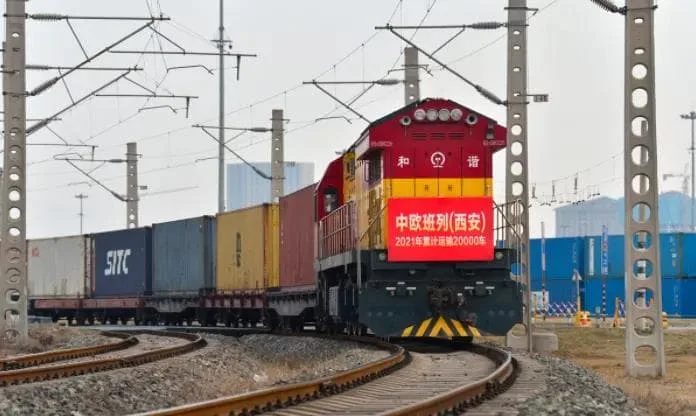
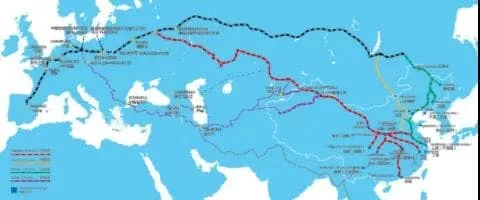
China and Europe have seen record growth in freight trains in the first two months of this year, driven by strong global demand for Chinese goods ranging from personal protective equipment to home appliances. With other transport disrupted by the outbreak, China-Europe freight trains have become the backbone of trade for countries along the "One Belt And One Road" route.
A total of 2,213 freight trains were sent between Chinese and European cities in January and February, up 96% year on year, according to a report by China State Railway Group Co. Cargo deliveries were also strong at 209,000 TEU, up 106% year on year.
Since May last year, more than 1,000 trains have been delivered each month for 10 consecutive months, the report said. Last year, China's railways ran 12,406 trains, up 50 percent year-on-year, breaking the "10,000" mark for the first time and 7.3 times the number in 2016, a spokesman for the National Development and Reform Commission (NDRC) said at a press conference in January.
Buck up
The One Belt And One Road countries have played an important role in supporting the continuous improvement of China's foreign trade. Exports to One Belt And One Road-related countries reached Rmb1.62tn ($249bn) in January and February, up 23.9 per cent year on year, Chinese customs said on Sunday.
The China-Europe freight train, a signature logistics channel for the "One Belt And One Road", has been growing rapidly since last year and is faster and cheaper than ships and planes to deliver goods, said a researcher with the China Railway Economic Planning and Research Institute. Rail travel times and costs have remained relatively stable as a shortage of containers at overstocked foreign ports has caused freight rates to rise sharply.
Despite heavy traffic abroad, trains can reach Germany in just 18 days, less than 35 days by sea, according to one trader. "China-EU freight trains are becoming very popular, especially after the suspension of certain transport services due to the continuous outbreak of sea and air freight," said a staff member at Chengdu International Railway Logistics Service. Prices for air and sea freight have risen sharply, making them more expensive than freight trains today.
Booking for trains, driven by strong logistics demand, has reached such an extent that many suppliers have even launched a lottery to allocate trains and containers, according to media reports.
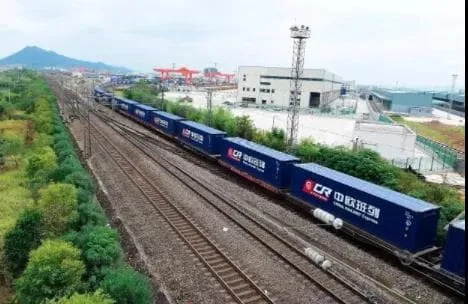
The Sino-European freight train is doing better in some areas, including Yiwu, the Zhejiang province known as the supermarket of the world. Yiwu has shipped 200 freight trains to European cities in the first two months of this year, up 336 per cent year on year, according to the customs director of Yiwu West Railway Station. The big increase is related to the backlog of goods that could not be delivered last year.
However, the shortage of containers on freight trains has eased in spite of strong demand. "As many new containers are being manufactured, some containers stuck abroad are flowing back to China. The number of containers needed for the trains is 15 per cent lower than in December, "the director general said.
According to the port customs, a clear trend is that the types of goods transported by trains have shifted from last year's main personal protective equipment to other daily items, such as household appliances and clothing.
The need for global cooperation
Other issues, such as capacity constraints at ports, have become potential obstacles to further improvements as cross-border freight train growth records continue to be broken.
To further strengthen One Belt And One Road's transport services and achieve sustainable growth in trade, China Railway is expanding the capacity of border ports by building new arrival ports, including Holgas Port in Northwest China's Xinjiang Uygur Autonomous Region and Erlianhot Port in North China's Inner Mongolia Autonomous Region.
According to a report China Railway sent to the Global Times over the weekend, the company's departure line, replacement line and loading and unloading facilities.
All the way to further strengthen the "area" of the transport service, promote the sustainable growth of trade, China railway is through new departure line, replace line, expanding including huoerguos port of northwest China's xinjiang uygur autonomous region and erlianhot port in north China's Inner Mongolia autonomous region, the border port capacity line, loading and unloading facilities.
However, the growth of rail freight routes requires cooperation at home and abroad. "There is not much room for the China-Europe freight train to shorten the transport time, as the transport speed is still the same, and in a special period it may only be extended by one or two days because of overcapacity at overseas ports," said a customs source, who declined to be named.
It is learned that China Railway has pledged to continue deepening international cooperation through transport cooperation by organizing video conferences of expert working groups to strengthen international cooperation and coordination and ensure the time efficiency of freight trains. Experts said that the number of freight trains between China and Europe is expected to continue to grow steadily in the future with the large-scale renovation and coordination with foreign countries.
Dec 15,2025
If you're a newly established company in the UAE planning to import goods from China and wants to know what are the best products imported to UAE from China. We will share with you the infomation you need step-by-step. China as the factory of th
Jan 02,2025
With global trade continuously growing, more and more companies in UAE are buying and shipping products from China to the UAE. Particularly in sectors like electronics, machinery, and fashion. And selecting the right shipping method
May 30,2024
Whether you're a small business or a multinational corporation, the efficiency and reliability of your supply chain depend greatly on the expertise and capabilities of your chosen freight forwarder.









 Email:


