Direct Answer# China to Europe FBA: Sea, Air, Rail or Truck — Which First Leg Fits Your ASINs? (2026 Decision Guide)
Quick answer: Pick the first leg by value density, stockout exposure and how reliably you can hit Amazon's booked delivery window — not by a single "best mode." Sea freight is the lowest cost per unit but least flexible, with transit measured in weeks. Air freight is fastest and most expensive, with transit measured in days. Rail is the middle path for Europe-bound FBA, and truck is best for consolidated, time-sensitive loads needing direct fulfillment-centre (FC) delivery — or as the final mile after sea or rail. None of the four guarantees a fast receipt: Amazon receives inventory against a booked slot, so missing the appointment delays your ASIN regardless of main-leg speed. Label and prep errors are a separate failure mode (FBA prep checklist).
Key takeaways
- Match the mode to the ASIN's job. High-margin, fast-moving SKUs can justify air; bulky, slow-moving replenishment usually fits sea.
- Main-leg speed is not received speed. A fast flight that misses the FC appointment still sits in a queue — plan for the delivery window, not just the flight.
- Rail is a genuine middle option for China-to-Europe FBA, but it is not a universal upgrade over sea; capacity and terminal handling vary.
- Truck is both a standalone first leg and the final mile for sea/rail. Clarify which one your quote includes.
- VAT/EORI/IOSS responsibility is a separate decision from mode; write it into the Incoterm and the forwarder instruction, not just the freight booking.
- Peak season is a capacity-and-slot problem. Book earlier and hold a buffer; do not rely on a last-minute air rescue for every SKU.
- Do not repeat prep work across modes. Reuse the same labeling and carton standard so your FC receipt is consistent (multi-supplier consolidation).
The four first legs at a glance
Relative bands below are illustrative only — an index for comparison, not a quote, and not a transit promise. Obtain current rates and schedules from your carrier or forwarder.
| Mode |
Relative cost* |
Relative transit* |
Best for |
Main constraint |
| Sea + truck |
Lowest (index 1) |
Weeks |
Bulky, heavy, slow-moving replenishment |
Long lead time; port congestion and slot risk |
| Rail + truck |
Mid-low (index ~2–3) |
Between sea and air |
Balanced Europe-bound FBA restock |
Capacity limits; terminal handling at both ends |
| Air + truck |
Highest (index ~6–12) |
Days |
High-margin, urgent, launch or rescue stock |
Chargeable weight and surcharges dominate cost |
| Truck (direct/road) |
Mid-high (index ~3–5) |
Depends on road distance |
Consolidated loads, direct FC delivery, intra-EU repositioning |
Road regulations, driver hours, border formalities |
\*Illustrative index where sea = 1. Not a rate, not a guarantee; verify with current market quotes (why quotes differ).
A quick mental model: sea buys cost, air buys time, rail buys balance, truck buys control of the last leg. Most mature Europe FBA plans use two or three of them together, assigning each ASIN group to the mode that fits its velocity.
How each option actually reaches an Amazon FC
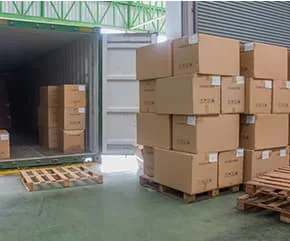
Sea + truck. Cargo moves by ocean to a European port, clears import, then moves by truck to the FC under a booked appointment. Cost per unit is lowest, but you must budget for ocean schedule variability, port handling and the truck slot. Use it for full-container or consolidated replenishment where lead time is planned months ahead.
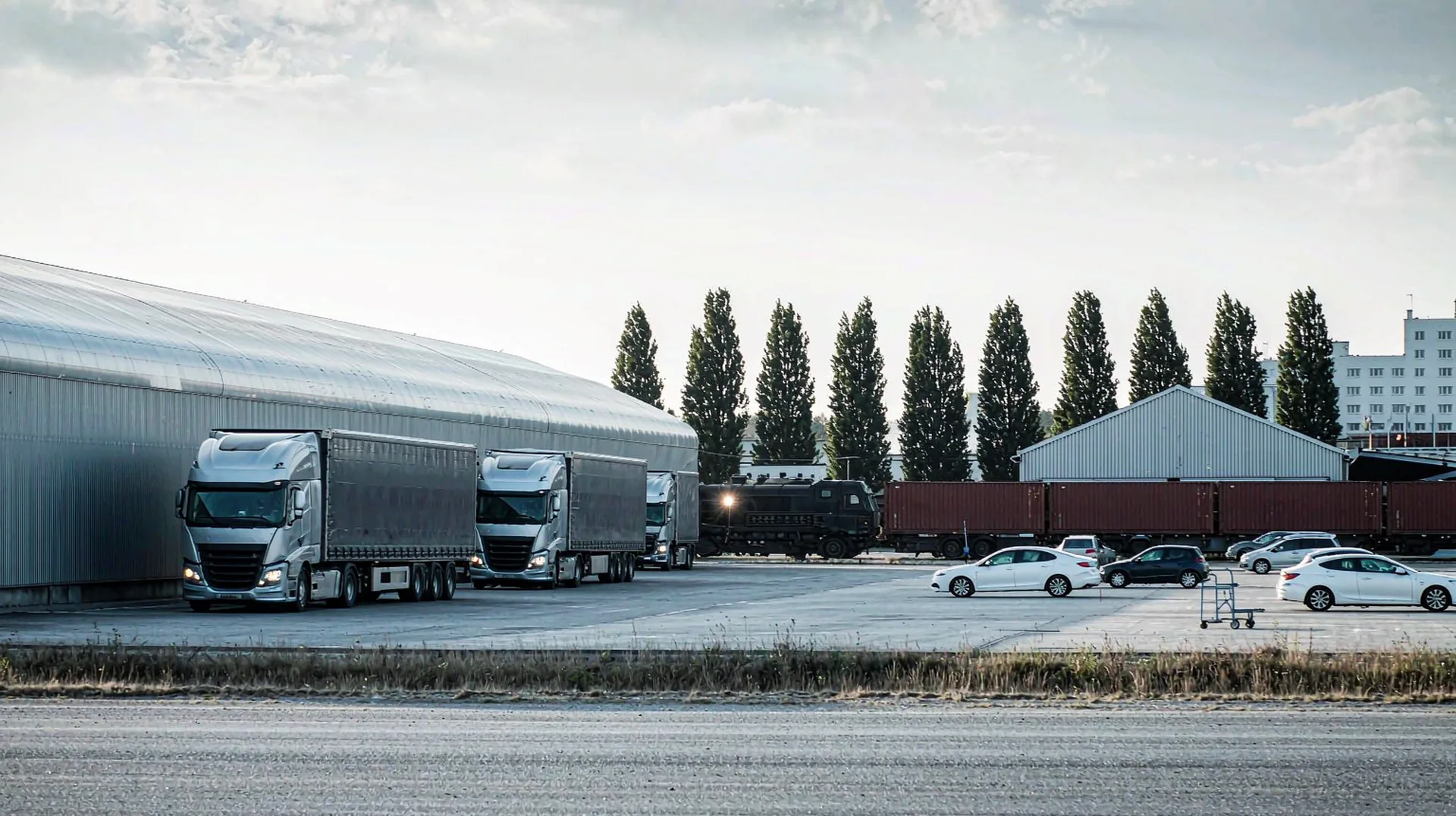
Rail + truck. Cargo moves by China–Europe rail to a European terminal, then by truck to the FC. It can shorten the planning horizon versus sea at a lower cost than air. Confirm the rail operator's current schedule, terminal cut-offs and whether the truck leg to your specific FC is included in the quoted price.
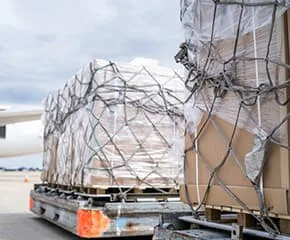
Air + truck. Cargo flies to an European airport, clears, then trucks to the FC. Fastest, but cost is driven by chargeable weight — the greater of actual and volumetric weight — so light-but-bulky goods can be surprisingly expensive (chargeable weight). Reserve it for launch stock, urgent top-ups and genuine stockout rescue.
Truck. Either a dedicated road movement from origin/allocation point, or the final mile embedded in the three options above. If your quote says "truck," confirm whether it means a standalone road service or merely the last-mile leg — the two have very different cost and responsibility.
For a general sea-vs-air-vs-rail decision framework on another lane, see the US-bound comparison; the logic transfers, but Europe adds VAT/EORI and multi-country FC routing.
Booking the delivery window — why mode choice matters
Amazon FBA inbound is slot-based. Your freight plan must end in a booked FC delivery appointment, and that appointment has to match carton labels, shipment ID and pallet/box configuration.
- Confirm the FC appointment before the main leg is committed. A fast air arrival without a slot is still delayed inventory.
- Keep labeling and carton standards identical across modes so receipts are predictable; mode changes should not trigger rework (prep rejection reasons).
- Build buffer around the appointment. Customs examination, terminal congestion or a missed truck slot can all push you into the next window.
- If you ship from several suppliers, consolidate to one inbound plan rather than letting each supplier book separately (multi-supplier FBA).
VAT, EORI and IOSS: responsibility by scenario
These are compliance mechanisms, not mode features. Confirm current rules with the relevant EU/UK authority or a qualified adviser; the table shows who typically carries the task, not a legal determination.
| Scenario |
Typical importer of record |
VAT / EORI / IOSS handling |
Seller action |
| Seller uses DDP-style door delivery |
Seller (via broker) |
Seller arranges import VAT/EORI; IOSS where applicable for low-value consignments |
Confirm scope in writing; price duty accurately (DDP from China) |
| Amazon/buyer is importer |
Amazon or named buyer |
Buyer handles import VAT and EORI; seller provides accurate invoices and HS data |
Supply complete, correct documentation |
| Low-value direct-to-consumer parcels |
Depends on setup |
IOSS may apply, subject to current EU rules and scheme eligibility |
Verify eligibility with a qualified adviser |
| Owner-stocked FBA with own EU entity |
Seller's EU entity |
Entity handles VAT registration and EORI |
Maintain registrations and records |
Do not treat Incoterm and mode as interchangeable. A mode choice ("rail") says nothing about who pays import VAT; that belongs in the commercial term (Incoterm choice) and in a landed-cost model (landed-cost framework).
Peak-season stockout risk and how to buffer
Peak season is less about speed and more about capacity, cut-offs and appointment scarcity. The risk is not one big failure but several small slippages that compound.
| Risk |
Where it bites |
Practical buffer |
| Capacity tightness |
Space and schedules fill early; spot rates rise |
Book ahead; hold contracted allocation |
| Cut-off misses |
Factory or port cut-off slips, rolling cargo to next departure |
Confirm cut-offs in writing, build days of slack |
| Port/terminal congestion |
Arrival unblocks late, truck slot missed |
Pre-book truck and FC appointment with margin |
| Appointment scarcity |
FC slots limited in peak windows |
Reserve slots early; stagger inbound by ASIN group |
| Air rescue overuse |
Emergency air erodes margin |
Keep a planned air allocation only for top movers |
A resilient plan assigns slow movers to sea, steady movers to rail, fast movers to air, and uses truck for control of the final leg — with a small, pre-approved air contingency rather than an all-air default.
A four-step decision path
- Segment ASINs by velocity and margin. Fast/high-margin can absorb air; slow/bulky should not.
- Fix the required in-stock date, then work backward through appointment, truck, clearance and main leg — not forward from "fastest mode."
- Assign responsibility for VAT/EORI/IOSS in the Incoterm and forwarder instruction; verify with a qualified adviser.
- Book the slot and hold a buffer. Confirm labeling and carton standard once, reuse across modes.
Selection checklist
- [ ] Segment SKUs by velocity, margin and stockout exposure before choosing a mode.
- [ ] Confirm each candidate mode's current schedule and cut-offs with the carrier.
- [ ] Work backward from the required in-stock date, including the FC appointment.
- [ ] Reserve the FC delivery slot before committing the main leg.
- [ ] Keep carton labels and shipment IDs consistent across all modes.
- [ ] Clarify whether "truck" is a standalone service or only the final mile.
- [ ] Decide who is importer of record and who handles VAT/EORI/IOSS.
- [ ] Reflect that responsibility in the Incoterm and commercial invoice.
- [ ] Build a landed-cost model, not just a freight-rate comparison.
- [ ] Hold a small, pre-approved air contingency for genuine top movers.
FAQ
Which first leg is cheapest for China-to-Europe FBA?
Usually sea freight per unit, because cost scales with volume rather than speed. It is not the best fit for urgent stock — verify current rates for your cargo.Is rail better than sea for Europe FBA?
It depends. Rail can shorten the planning horizon at a higher cost than sea, but capacity and terminal handling vary. Treat it as a middle option, not an automatic upgrade.When does air freight make sense for FBA replenishment?
For launches, urgent top-ups and genuine stockout rescue on high-margin ASINs. Chargeable weight makes it costly for bulky goods.Does a faster main leg mean faster inventory receipt?
No. Amazon receives against a booked appointment. A fast arrival without a slot is still delayed.What is "truck" in a first-leg quote?
It can be a standalone road service or the final mile after sea/rail. Confirm which one is priced; the responsibility differs.Who handles VAT, EORI and IOSS?
It depends on the importer-of-record setup and the Incoterm, not on the transport mode. Confirm with a qualified adviser and current EU/UK rules.Can I change modes without redoing labels?
Ideally yes — keep one labeling and carton standard across modes. Changing standards invites receipt problems.How do I compare quotes across sea, air, rail and truck?
Normalize to landed cost and include the final mile, duty and appointment risk, not just the main-leg rate.What causes most peak-season stockouts?
Compounding small slippages — capacity, cut-offs, congestion and scarce appointments — rather than one dramatic failure.Should I consolidate multiple suppliers before shipping to FBA?
Yes, usually. One consolidated inbound plan is easier to book and track than several separate supplier bookings.
Sources
- Baton Logistics, "Multi-Supplier to Amazon FBA," "FBA Shipment Rejected — Prep Checklist," "Amazon FBA Returns & Removal Orders" — inbound planning, prep and reverse logistics.
- Baton Logistics, "Landed Cost from China Framework," "Door-to-Door DDP from China," "Why Freight Forwarder Quotes Differ," "Calculate CBM & Chargeable Weight" — cost scope and weight basis.
- European Commission and relevant national customs/VAT authorities — current VAT, EORI and IOSS rules; Amazon Seller Central — current FBA inbound appointment and packaging requirements.
This guide is general information, not legal, tax or customs advice. Rules on VAT, EORI and IOSS and Amazon's inbound requirements change — verify the current official text and your own circumstances. Baton Logistics is an independent China freight forwarder and NVOCC; it is not a licensed customs broker, tax adviser or surety, and nothing here guarantees clearance, appointment or delivery.
Get your Europe FBA first leg mapped
Tell us your ASIN groups, targets and in-stock dates, and we will outline workable mode combinations with a clear responsibility and cost scope. Contact overseas02@batongls.com or WhatsApp +86 191 2930 8513.