
Door-to-Door Shipping From China To The World
Since late February, the outbreak has gradually spread from Italy to the whole of Europe, and European countries have declared a state of emergency and started to "seal the country and the city".
After nearly two months of outbreak, the number of confirmed cases, infection rate and death rate in European countries have declined significantly.As a result, some European countries have begun to formulate plans aimed at the eventual return to normal social life.
At present, Spain, Germany, Austria, Denmark, the Czech republic and other countries have said they will relax the measures taken to cope with the new outbreak.This also means that orders can be placed and shipments can be prepared.You foreign trade, freight forwarders can start to contact with the consignee, overseas agents.
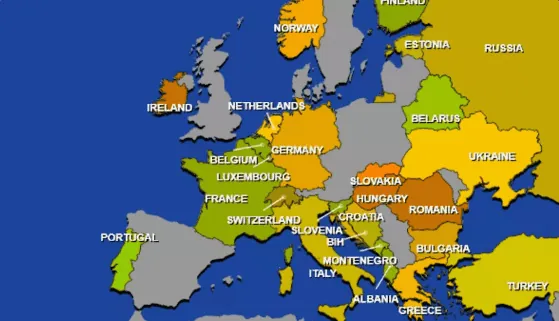
Germany: ends blockade on April 19
Germany has put in place a series of measures, including mandatory masks in public places, restrictions on gatherings and rapid tracking of infection chains, to help the country gradually return to normal life after its blockade ended on April 19, foreign media reported Thursday.
A draft action plan drawn up by the German interior ministry and seen by Reuters on Thursday said the measures should be enough to keep the infection rate below the average number of people infected in one person and public life could gradually return to normal.
Germany has been under lockdown since March 22, with restaurants and most shops closed.Although the restrictions will gradually be relaxed, it may take time for full normalcy to return.
The document envisages a phased return to normal life, supported by mechanisms that will be able to track the more than 80 per cent of people an infected person has been in contact with within 24 hours of diagnosis, with the infected and their contacts isolated.The document assumes that the covid-19 pandemic will continue until 2021.
Shops and schools in some parts of Germany will reportedly be allowed to reopen, border controls will be relaxed, but large events and private gatherings will remain banned.Once enough respirators are available, they must be worn on trains, buses, factories and in public places.
As of press time, 5,404 new cases were confirmed in Germany, bringing the total number of confirmed cases to 113,296, including 2,256 deaths and 36,081 cures.On the curve, the number of current diagnoses in Germany has been on the decline.
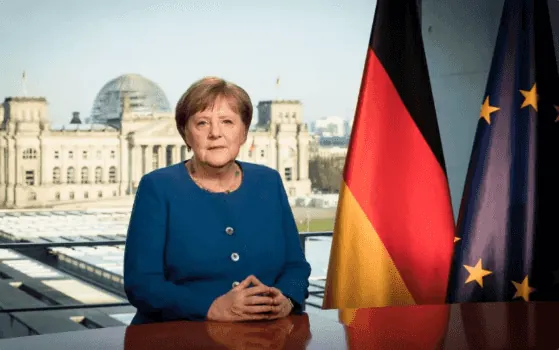
Spain: state of emergency ends after April 26
Spain will end its state of emergency and return to normal life after April 26, Spanish government spokeswoman maria Jesus montero said Tuesday.
Spain is under a state of emergency as a result of the new outbreak, which began on March 16 and will continue until at least April 26.
Maria said normal life would resume in Spain after April 26, but it would still be under strict control.Maria also said to try to detect asymptomatic carriers of the virus to see if anyone has gained immunity from the disease.
In the end, maria stressed that not all Spanish industries had been hit by the downturn and that the government would not suspend taxes.
As of press time, 6,278 new cases had been confirmed in Spain, bringing the total to 148,220, including 14,792 deaths and 48,021 cures.On the curve, the growth in the number of confirmed cases in Spain has slowed markedly since late march.

Czech republic: relaxation of partial closure measures
Some 10,600 people are expected to be infected by the end of April, said health minister vojjaer.The Czech republic has successfully prevented the uncontrolled spread of a novel coronavirus and can begin preparations for a return to normal life.
The Czech government agreed on April 6 to ease some containment measures imposed due to the outbreak, officials said, as the country's growth in novel coronavirus infections has leveled off in recent days.
The Czech republic was one of the first countries in Europe to declare a state of emergency.At that time, the government imposed some of the strictest restrictions on public life to prevent the spread of a novel coronavirus.
Industry minister karel havlicek said the government would allow some shops to reopen and would ease restrictions on outdoor sports such as running and cycling.
Austria: allow small shops to reopen
Austrian chancellor kurz announced Wednesday that Austria will gradually relax its strict epidemic prevention measures after mid-april, given the initial control of the epidemic.
Based on its assessment of the outbreak, the government has established a timetable for returning to normal social functioning:
Travel restrictions for residents are extended to the end of April.
◆ from April 14, small shops and horticultural markets can resume business under the condition of epidemic prevention.
◆ from May 1, all commercial shops and barber shops will resume business.
◆ the hotel and catering industry will resume business from mid-may.
◆ the school distance teaching has been temporarily extended to the middle of may.
Gatherings and large events will be banned until the end of June.
Kurtz cautioned that the outbreak must be prevented from rebounding while leading a gradual return to normalcy, including increased protection for at-risk populations, social distancing, and attempts to monitor outbreaks using big data and cellphone location technology.
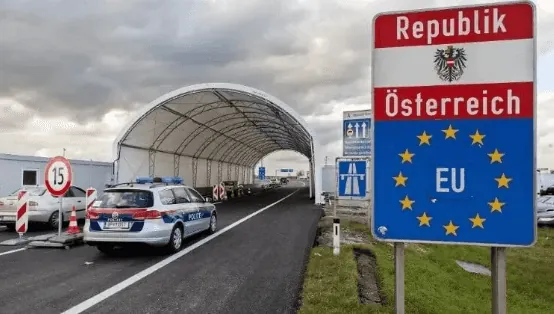
Denmark: plans to reopen day care centers and schools
Danish prime minister frederik riksen said Thursday that Denmark's recent response to the new outbreak was appropriate and that the government would lift the ban "gradually and in a controlled manner" from Monday.
These include: day care centers and elementary grades 1 through 5.She stressed that measures must be taken to ensure a reasonable distance between children before such institutions could be reopened.Students in grades 6 through 10 will continue to study at home until May 10.At the same time to cancel the year of high school entrance examination, the previous year as a reference for admission.
Fraser rickson also announced that he would continue to ban gatherings of more than 10 people and close borders, malls, libraries, cinemas and restaurants until May 10.Major events such as football matches and concerts will be suspended until August.She also said that if the outbreak data worsened in the coming week, the initial plan to return to work and school would be canceled.
As long as people continue to comply with government regulations, the initial plan to return to work and school will be "reasonable," said Thomas mulbach, executive deputy director of the Danish national serum institute.
As of press time, 195 new cases were confirmed in Denmark, with a total of 5,597 cases confirmed, 218 cases died and 173 cases cured.On the curve, the growth in the number of confirmed cases in Denmark has slowed.
Italy: ready for 'phase two'
On April 5th 525 new deaths were recorded in Italy, the smallest number since March 19th, while the number of patients in intensive care units, which are in short supply, fell for a second day.Italy, currently the world's deadliest country for COVID 19 deaths, saw a drop in the number of critically ill people admitted to hospital on Thursday for the first time since the outbreak began.
'the curve has leveled off and started to decline,' said silvio brusselfrou, director of the Italian national institutes of health. 'this is an outcome that we have to achieve every day.'
"If the downward trend is confirmed, then we need to start thinking about the second phase of outbreak control and continue to control the spread of the disease."
After the data levelling off and falling, roberto spelenza, Italy's health minister, told la repubblica newspaper that more testing combined with an enhanced health system might mean Italy could gradually relax its blockade until a vaccine was developed.
Mr Spelanza stressed that in the "second phase" people still had to maintain social distance, use extensive personal protective equipment such as masks, and strengthen local health systems to treat suspected cases more quickly and effectively.
Mr Spelenza said the Italian government would expand the scope of detection and tracing of close contacts, including the use of smartphone apps and other forms of technology, and set up a network of hospitals to treat patients with COVID 19.
"The next few months will be difficult.""Our task is to create the conditions to co-exist with the virus, at least until a vaccine is developed."
As of press time, 3,836 new cases were confirmed in Italy, totaling 139,422 cases, 17,669 deaths and 26,491 cures.On the curve, the number of confirmed cases in Italy has slowed since late march.
Britain: may follow Italy
The British government will study the experience of Italy and other countries in lifting the COVID 19 quarantine as ministers plan a return to normal life and economic activity, the financial times reported Thursday.
But because the outbreak has not yet peaked, officials are reluctant to talk publicly about an "exit strategy" for blocking quarantine measures.The British government is considering how to combine testing and technology to phase out the quarantine over the summer.
"The UK will be on alert for a second outbreak, but if countries like Italy can get the situation under control, that will help us find a way to lift the blockade."
So far, the NHS is only able to carry out 15,000 tests a day and has yet to find a sufficiently effective antibody test to use.Niall ferguson, an epidemiologist at imperial college London and an adviser to the British government, has previously said that mass testing could require 50,000 swabs a day and could start at the end of may.
As of press time, 5,517 new cases had been confirmed in the UK, bringing the total to 61,474, including 7,111 deaths and 345 cures.
France: the outbreak is improving
On the 8th, immunologist delfrech, chairman of the French government's scientific committee, declared that the situation in the country had improved and that "in the eastern region, we can say that the most difficult period has passed."
Delfrech also said: "home quarantine should be in place for a few more weeks from now, and our conclusion is that..."With what we have, we can certainly begin to discuss and determine what the strategy is going to be after that, but the most critical, the most important thing is that we put in place a strict home quarantine for a few weeks.""It is precisely because there are signs that home segregation is starting to have an effect that it should continue," he stressed.
As of press time, 3,881 new cases were confirmed in France, bringing the total number of confirmed cases to 112,950, including 10,869 deaths and 21,254 cures.On the curve, the current diagnosis in France has also slowed in recent days.
Dec 15,2025
If you're a newly established company in the UAE planning to import goods from China and wants to know what are the best products imported to UAE from China. We will share with you the infomation you need step-by-step. China as the factory of th
Jan 02,2025
With global trade continuously growing, more and more companies in UAE are buying and shipping products from China to the UAE. Particularly in sectors like electronics, machinery, and fashion. And selecting the right shipping method

May 30,2024
Whether you're a small business or a multinational corporation, the efficiency and reliability of your supply chain depend greatly on the expertise and capabilities of your chosen freight forwarder.









 Email:


