
Door-to-Door Shipping From China To The World
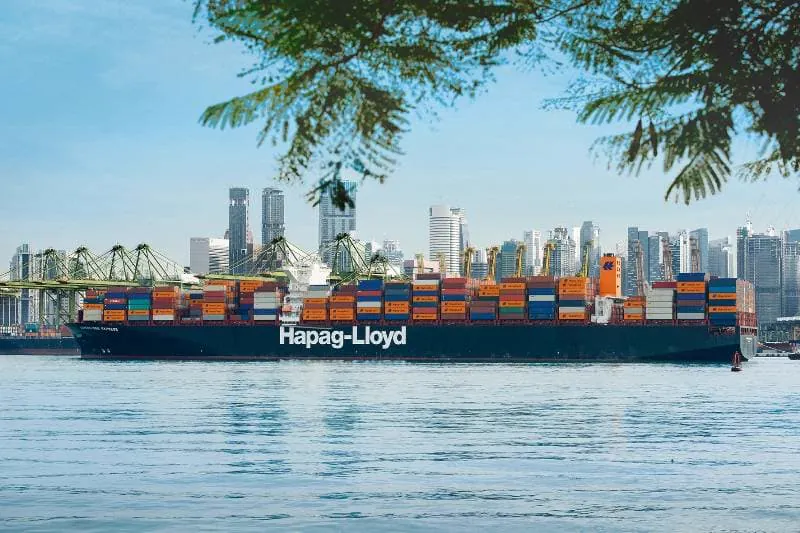
In a virtual press conference hosted by the world’s fifth largest liner company, CEO Rolf Habben Jansen explained that equipment turn times had slowed and more boxes had been needed to ensure its customers had access to a ready supply of containers. “We’ve leased an extra 100,000 TEU, which is equivalent to about 5% of our operating pool and combined with our planned orders this year our container fleet will increase by as much as 10%.”
In contrast, he confirmed that a planned order for at least six 20,000 TEU-class ships had been put on hold and would probably not happen for several months. Meanwhile, Jansen referred to returning a “small double-digit number” of charter vessels to their owners and putting some of its own ships into temporary lay-up, if necessary.
Across the main east-west trades, slot capacity has been trimmed by between 15% and 20% compared with last year and the executive indicated that Hapag-Lloyd was in line with the industry on this issue.
He explained that Hapag-Lloyd’s operational approach was based on flexibility. “If demand suddenly picks up then we can respond quickly to cover that,” he said, “and if trade deteriorates further then we can make additional changes to our services, adjust capacity and take costs out of the system and weather the storm that way.”
The executive is hoping that a recovery will start in in Q3 2020 and then continue for the rest of the year. But he expects global container volumes to fall by 10% to 11% in 2020 and for Hapag-Lloyd’s own numbers to be close to that.
But Jansen said: “There is so much uncertainty around at the moment and all forecasts are very fluid. One can only speculate as to where we might be in four to eight weeks, yet alone at the end of the year.”

Dec 15,2025
If you're a newly established company in the UAE planning to import goods from China and wants to know what are the best products imported to UAE from China. We will share with you the infomation you need step-by-step. China as the factory of th
Jan 02,2025
With global trade continuously growing, more and more companies in UAE are buying and shipping products from China to the UAE. Particularly in sectors like electronics, machinery, and fashion. And selecting the right shipping method
May 30,2024
Whether you're a small business or a multinational corporation, the efficiency and reliability of your supply chain depend greatly on the expertise and capabilities of your chosen freight forwarder.









 Email:


