
Door-to-Door Shipping From China To The World
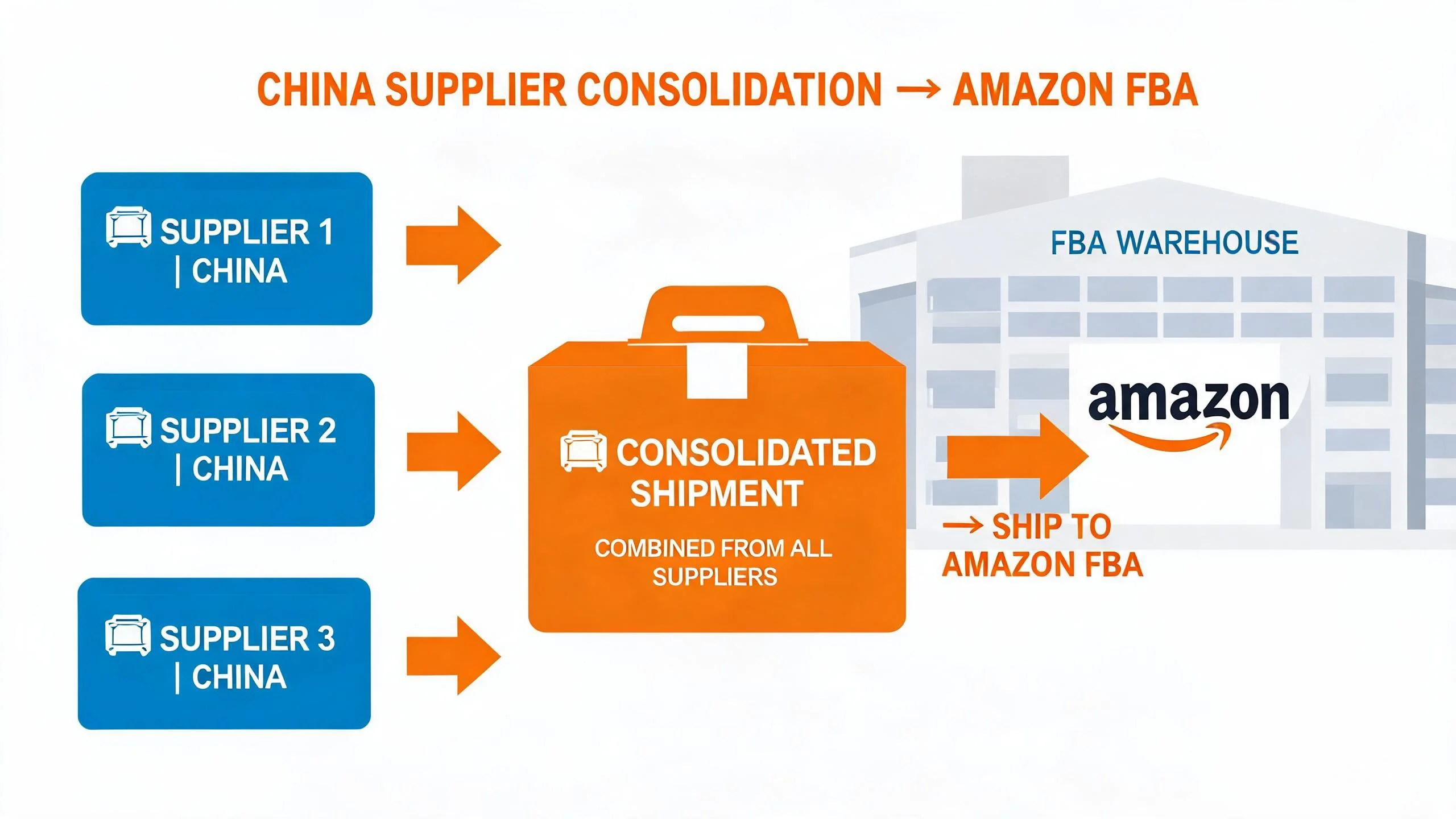
Quick answer: Returned and unsellable Amazon FBA inventory does not leave the fulfilment network on its own. Per Amazon Seller Central guidance (sellercentral.amazon.com), sellers choose, per unit: return it to sellable stock, liquidate it, dispose of it, or create a removal order that ships the goods to any address you designate — most often a third-party overseas warehouse that grades, resells, transships or consolidates them for return to China. The right path depends on unit value, condition grade, destination demand and the paperwork needed to re-export. This guide walks through those decisions and documents before you commit more storage spend.
This article is written from the freight side — what the forwarder and the warehouse need to see before a reverse shipment is booked.
Sellers often use these terms interchangeably, but they describe different inventory states with different handling rules.
| Term | What it is | Where it sits | Typical outcomes |
|---|---|---|---|
| Customer return | A buyer sent the item back; Amazon grades it as sellable or unsellable | Fulfilment centre, sellable or unfulfillable pool | Restock, liquidate, dispose, or removal order |
| Unsellable inventory | Damaged, opened, expired or otherwise non-sellable stock held in the unfulfillable pool | Fulfilment centre, unfulfillable pool | Removal order, dispose, or investigate reimbursement |
| Removal order | Your instruction to ship inventory out of FBA to an address you designate | In transit once processed | Delivery to a 3PL warehouse, your own facility or a consignee |
Two consequences follow from this table. First, customer returns do not automatically become your problem — but every unit sitting in the unfulfillable pool accrues storage exposure until you act. Second, a removal order is the only mechanism that physically moves FBA inventory to a location where repacking, regrading or re-export become possible.
Grading outcomes, fee schedules, automation settings and timelines follow Amazon's current Seller Central policies — they change, so this article stays at the principle level.
The flow below reflects the general process described in Amazon Seller Central guidance (sellercentral.amazon.com); always confirm the current procedure there before acting.
The step most sellers underestimate is number 5. A warehouse that receives quietly and grades nothing turns a recoverable dispute into a write-off.
For most cross-border sellers, removal orders do not go "home" — they go to a third-party warehouse in the destination country. That warehouse is where value is recovered or lost:
Receiving from Amazon is not the same as receiving from your suppliers. Removal cartons arrive with Amazon's packing logic, not yours, so the warehouse needs a documented receiving routine similar to the one used when consolidating inventory from multiple suppliers into FBA.
Once inventory is under your control at an overseas warehouse, there are four realistic paths. The right one is cargo-specific — a decision matrix beats a general rule.
| Path | Best when | Cost profile (items to expect) | Main risk |
|---|---|---|---|
| Return to China | High unit value; brand-controlled goods; refurbing or inspection only possible at your China facility | Overseas haulage + export clearance + ocean/air freight + China re-import clearance and taxes per current China Customs rules | Paperwork gaps on re-import; freight consuming most of the residual value |
| Local resale | Goods graded sellable; functioning local marketplace or B2B channel | Relabelling, repack, marketplace fees, local fulfilment | Channel saturation; condition-grade disputes |
| Transship to another market | Demand exists in a second market and the product is compliant there | Warehouse handling + new-market import clearance + freight | Product or labelling not compliant in the new market |
| Dispose / donate locally | Low unit value, high volume, heavy or bulky; refurbishment cost exceeds recoverable value | Removal or disposal fees, possible donation documentation | Writing off units that had recoverable value |
Two qualitative rules emerge from practice. Heavy, low-value, bulky goods rarely justify international return freight — the freight line alone can exceed the recoverable value. And high-value branded goods often justify return to China even at meaningful freight cost, because refurbishment, serial-number control and channel protection matter more than the freight line. Neither rule substitutes for pricing the actual cargo.
Reverse logistics invoices fail most often because the seller priced the freight line and forgot the rest. Price these items before choosing a path — we list the items, not amounts, because rates move and Amazon's removal fees follow its current fee schedule on Seller Central.
| Fee item | Charged by | Notes |
|---|---|---|
| Removal order fee | Amazon | Per unit / per shipment per the current Seller Central fee schedule |
| Destination-country storage | 3PL warehouse | Accrues daily until disposition; the same discipline that governs demurrage, detention and storage at ports applies here |
| Receiving, count and grading labour | 3PL warehouse | Usually the difference between a defensible and an indefensible Amazon discrepancy claim |
| Repack, relabel, poly-bagging | 3PL warehouse | Required to restore sellable status on many returns |
| Inland haulage to port or airport | Forwarder / trucker | Quoted by lane and volume |
| Export clearance and documentation | Forwarder / customs broker | Destination-country rules apply, e.g. US export filings per CBP guidance (cbp.gov) |
| International freight (ocean / air) | Carrier / forwarder | Chargeable weight rules apply, not just gross weight |
| China re-import clearance, duties and taxes | China customs broker | Executed per China Customs' current return/re-import regulations (customs.gov.cn) |
Ask for all of these as line items in one quote, then compare the total against the recoverable value of the graded lot — not against a gut feeling from the listing price.
Re-exporting returned goods from the US or EU — whether to China or a third market — is a documentation exercise, and the documents that matter most are the ones created at import, months earlier.
The recurring failure is a value mismatch: the original import shows one figure, the re-export invoice another, with no bridge explaining returns, depreciation or refurbishment. Write that bridge down once, and reuse it across shipments.
Reverse logistics rewards unglamorous capabilities. When vetting a warehouse or forwarder for FBA returns work, check:
When the quotes arrive, reconcile every charge against what was actually performed — the line-by-line audit habit explained in our freight quote vs invoice guide.
Q: Do I have to remove unsellable inventory from FBA?
No, but it remains in Amazon's network accruing storage-related charges until you either remove or dispose of it. Most sellers set a routine review cycle rather than deciding unit by unit.
Q: Can a removal order ship directly back to China?
Removal orders ship to an address you designate in the marketplace country; direct international removal destinations and restrictions follow Amazon's current Seller Central policy. In practice, most sellers remove to a local third-party warehouse, then export from there with proper documentation.
Q: Is it cheaper to dispose of returns than ship them back to China?
It depends entirely on the cargo. Low-value, bulky goods usually cost more to return than they are worth; high-value, brand-sensitive goods usually justify the return leg. Price the full fee list in Section 5 against the graded lot's recoverable value before deciding.
Q: What condition are returned goods in when they leave an FBA warehouse?
Amazon grades returns into sellable and unsellable, but grading at the fulfilment centre is not a refurbishment service. Detailed condition varies unit by unit, which is exactly why a grading warehouse should verify before you commit a disposition path.
Q: Who files the export declaration when I re-export returns from the US?
Under US rules, the US principal party in interest or its authorised agent is responsible for export filings, per CBP guidance (cbp.gov). In practice your forwarder usually files as the authorised agent — confirm this in writing before booking.
Q: Will I pay duty again when the goods re-enter China?
Returned-goods re-imports are handled under China Customs' current regulations on returned goods, which prescribe the applicable declaration channel and documentary requirements (customs.gov.cn). Have a China customs broker confirm the applicable treatment for your specific shipment before it departs.
Amazon's returns, removal and fee policies change over time. Confirm current guidance on Seller Central before acting. This article is operational guidance for logistics planning, not legal or tax advice.
If you are moving returned or unsellable FBA inventory through a US or EU warehouse and want the removal, re-export and return-to-China legs quoted as one plan, Baton Logistics — a Shenzhen-based freight forwarder — can map the route and the document set before you book.

Dec 15,2025
If you're a newly established company in the UAE planning to import goods from China and wants to know what are the best products imported to UAE from China. We will share with you the infomation you need step-by-step. China as the factory of th
Jan 02,2025
With global trade continuously growing, more and more companies in UAE are buying and shipping products from China to the UAE. Particularly in sectors like electronics, machinery, and fashion. And selecting the right shipping method
May 30,2024
Whether you're a small business or a multinational corporation, the efficiency and reliability of your supply chain depend greatly on the expertise and capabilities of your chosen freight forwarder.