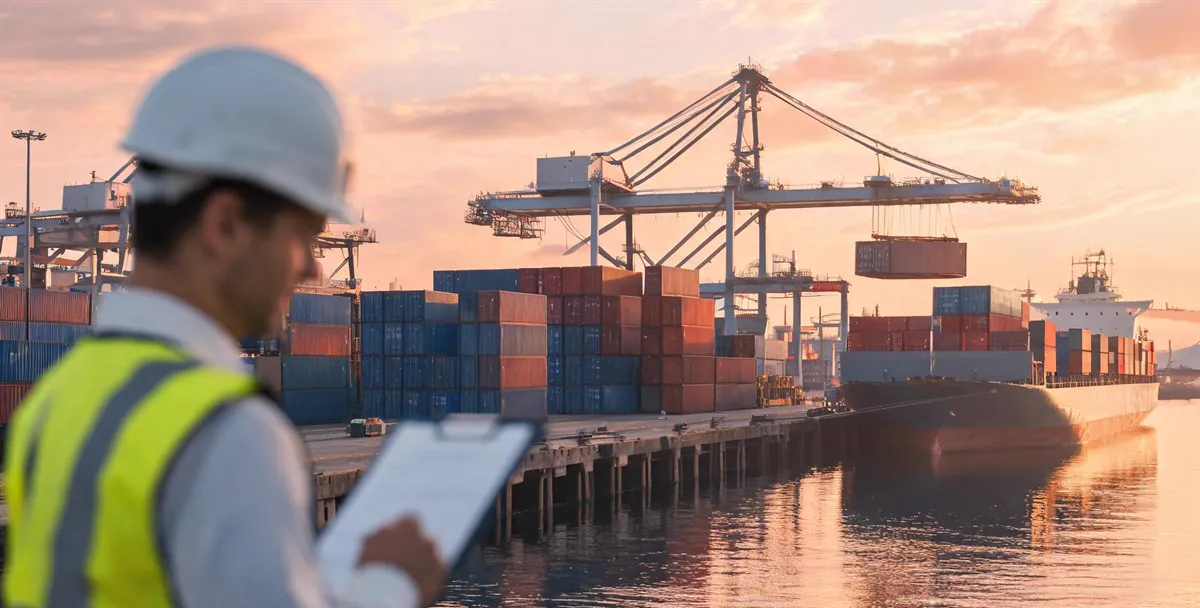
Direct answer: Your China sea freight invoice is usually higher than the quote because the quote typically covers only the ocean portion, while the invoice also includes local origin charges (THC, documentation, seal, handling) and, depending on terms, destination charges — plus temporary surcharges like the PSS (Peak Season Surcharge) and GRI (General Rate Increase) that weren't fixed when you got the quote. A quote is a snapshot; the invoice reflects what actually applied on sailing day. Below is a line-by-line table of every common fee, what triggers it, and who usually pays.
By the Sea Freight Quote Desk team, Baton Logistics — we build China-origin ocean freight quotes for importers in the US, EU and Middle East every day, and "the invoice is higher than the quote" is the single most common call we get.
A freight quote is a conditional estimate. Three things change between quote and invoice:
None of this means the forwarder "added hidden fees." It means the quote captured a subset of the real cost. The fix is to ask for an all-in quote under your Incoterms (usually FOB Shenzhen or CIF/CFR your port) and to read the line items below before you book.
Illustrative only. The amounts below show structure, not current market rates. Always confirm against your own quote and the carrier's tariff before booking.
| Line item | What it is | When it's charged | Usually paid by | Illustrative range (USD) |
|---|---|---|---|---|
| Basic ocean freight | The carrier's charge to move the container port-to-port | On booking, per container | Per Incoterms | 1,000–3,500 / 40HQ |
| THC (Terminal Handling Charge) | Port crane + terminal handling at origin (and destination) | At both ports | Shipper (origin) / consignee (dest.) | 80–160 / container |
| Documentation fee | B/L issuance, filing, telex release | At origin | Shipper | 30–60 |
| Seal / container seal fee | One-time high-security seal | At stuffing | Shipper | 5–15 |
| Origin handling / CFS | Stuffing, consolidation, gate-in (LCL especially) | At origin warehouse | Shipper | 20–90 (LCL per CBM) |
| Customs clearance (export) | Export declaration filing | At origin | Shipper | 40–90 |
| Destination charges | DTHC, delivery order, unpacking | At arrival port | Consignee (unless DDP) | Varies widely |
| PSS (Peak Season Surcharge) | Temporary surcharge in peak months | Announced per sailing | Per contract | 100–500 / container |
| GRI (General Rate Increase) | Carrier-wide rate adjustment, usually monthly | On applicable sailings | Per contract | 0–400 / container |
Baton Logistics publishes its service scope here: Ocean Freight and Customs Clearance.
Q: Why is my freight invoice higher than the quote?
A: Usually because the quote covered only the ocean freight, while the invoice also includes origin local charges (THC, docs, seal) and any PSS/GRI that applied on the actual sailing date.
Q: What is THC in sea freight from China?
A: Terminal Handling Charge — the port's fee to handle your container on and off the vessel. It applies at both the origin and destination port.
Q: Are PSS and GRI the same thing?
A: No. PSS is a temporary peak-season surcharge tied to capacity; GRI is a broader, often monthly carrier rate adjustment. Both can appear on the same invoice.
Q: Who pays destination charges — me or the supplier?
A: Under FOB/CIF/CFR, the consignee (you) typically pays destination charges. Under DDP, the seller/forwarder handles them. Check your Incoterms.
This article is part of our topic clusters on Baton Logistics:
Mar 09,2022
At the beginning of the new year, the most frequently asked question after work is about RCEP. I really want to write an article to introduce it to you, but my ability is limited, and the scope of RCEP is too large. I can only answer some of the most freq
Mar 09,2022
Yes, our service cover all major ports in China areas , like Shanghai / Qingdao / Ningbo/Shenzhen/Guangzhou/Hong Kong etc, Our warehouse facility in these ports are more than 5,000 square meter.
Mar 09,2022







 Email:


