Direct Answer# Shipping to Australia from China: Commodity Compliance, GST and Quarantine (2026)
Quick answer: For China-to-Australia cargo, the decisive question is rarely "sea or air" — it is whether the specific product is allowed and how it must be declared. Australia applies a strict biosecurity and product-compliance regime at the border: wooden packaging must meet ISPM15, food and many biological goods face quarantine controls, cosmetics and electronics have their own declaration and standards requirements, and imports may attract GST that a registered importer accounts for. If a shipment is detained, there is a defined path to release, re-export or destruction. Rules, thresholds and fees change — treat everything here as general mechanism, not legal advice, and confirm current requirements with the Australian Border Force (ABF) and the Department of Agriculture, Fisheries and Forestry (DAFF). This guide focuses on product-level compliance, not on choosing a freight mode (mode overview).
Key takeaways
- Compliance is decided by the product, not the box. The same freight route can carry a clean shipment or a detained one depending on what is inside and how it is declared.
- Wood packaging is a border issue. Timber pallets and crates must meet ISPM15 treatment and marking requirements; non-compliant timber can stop an otherwise perfect shipment.
- Food, cosmetics and electronics are assessed differently. Quarantine risk, ingredient rules and electrical safety each drive a different declaration and evidence set.
- GST is an importer obligation. Whether and how you account for GST on imports depends on importer registration and the value of the goods — confirm the current mechanism with the Australian Taxation Office (ATO).
- Detention has a process, not a panic button. A held shipment can usually be resolved by supplying evidence, treatment, re-export or destruction — but costs accumulate while it waits.
- Numbers and lists change. We do not state current thresholds, rates or prohibited-item lists; verify with ABF, DAFF and the ATO.
The first gate: biosecurity and wood packaging
Australia's biosecurity regime is designed to keep pests and diseases out. At the border this is administered by DAFF, working alongside ABF. The practical implication for a China shipper is that packaging is part of the compliance question, not an afterthought.
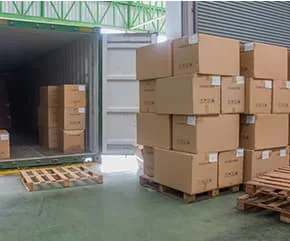
ISPM15 is the international standard for wood packaging material in international trade. In plain terms: solid wood pallets, crates and dunnage must be treated (commonly by heat treatment) and carry a recognised treatment mark. Machinery-made timber packaging and certain processed wood products may be exempt, but you should not assume an exemption without confirming it.
| Packaging type |
General expectation |
Practical risk if ignored |
| Solid wood pallet / crate |
ISPM15 treatment plus visible compliant mark |
Shipment stopped, re-treatment or disposal ordered |
| Heat-treated timber with mark |
Mark must be legible and correspond to treatment |
Illegible or incorrect mark treated as non-compliant |
| Plywood / OSB / engineered board |
Often exempt from ISPM15 depending on processing |
Exemption must be confirmed; do not assume |
| Plastic or metal pallet |
Not wood, so ISPM15 does not apply |
Confirm it is clean and free of organic residue |
| Wood dunnage inside a container |
Same treatment logic as other solid wood |
Hidden dunnage is a common source of border findings |
The discipline is simple: specify compliant packaging at the purchase order stage, photograph the marks before stuffing, and make sure your supplier's packing list matches what is physically loaded. A shipment held over a pallet mark is a preventable delay.
Category-by-category declaration differences
The table below compares the compliance logic for three common categories shipped from China. It does not list specific prohibited items or current thresholds — those change and must be confirmed with the authorities.
| Category |
Primary border concern |
Typical evidence to prepare |
Common failure |
| Food and plant products |
Biosecurity/quarantine risk: pests, disease, untreated material |
Official phytosanitary or health certificates where required; accurate ingredient and origin description |
Undeclared food, missing certificate, unapproved additives |
| Cosmetics and personal care |
Ingredient restrictions, labelling, consumer safety rules |
Ingredient list, label artwork, safety evidence where required |
Undeclared cosmetics, non-compliant labels, restricted ingredients |
| Electronics |
Electrical safety, electromagnetic compliance, batteries |
Test reports, compliance marks, battery documentation |
Missing safety evidence; undeclared lithium cells |
Three observations matter. First, food is a quarantine question before it is a customs question — declaring it accurately at the border is the starting point, and a "sample" is not automatically exempt. Second, cosmetics are judged on ingredients and labels, so re-labelling after arrival is often too late. Third, electronics may trigger a second compliance layer if they contain batteries or wireless functions; the battery rules are a separate subject with their own documentation (dangerous goods handling, lithium battery air guidance).
If your goods fall under preferential tariff arrangements, origin documentation is a separate track from biosecurity — a certificate that helps with duty does not replace a quarantine certificate (RCEP certification notes).
GST: registration and the declaration mechanism
Australia's Goods and Services Tax applies to imported goods, and the mechanism differs from a simple "pay tax at the border" model in some other countries. The key concept is the registered importer: a business that is registered for GST can account for the GST on its imported goods through its activity statement, rather than paying it all at the border — subject to the current rules and conditions set by the ATO. Where goods are imported by an unregistered party or outside the registered-importer mechanism, GST may be collected at the border instead.
| Situation |
General mechanism |
Who controls the process |
What to confirm |
| Registered business importer |
GST accounted for through the activity statement |
The importer, with its tax adviser |
Current registration conditions and reporting method |
| Unregistered importer / private consignee |
GST may be collected at the border |
ABF / broker |
Who pays and how it is evidenced |
| Low-value imported goods |
Special rules may apply to low-value consignments |
Importer / platform / carrier |
Current thresholds and collection method |
| DDP shipment |
Forwarder prepays border charges, bills back |
Forwarder and importer |
Whether GST is inside the DDP price |
Two cautions. The tax treatment is a matter for your own registered tax adviser, not something a freight forwarder should determine for you. And a DDP quote must state clearly whether GST is included — "all-in" is not specific enough (Incoterm scope, IOR responsibilities). For a wider view of how border taxes fit into total cost, see the landed-cost framework.
When a shipment is detained: the handling path
A detention is a process, not a dead end. The exact steps depend on the reason for the hold, but the sequence is predictable. Acting quickly and with complete evidence is what limits cost.
| Stage |
What happens |
Your best action |
| 1. Hold notice |
ABF/DAFF flags the shipment and notifies the importer or broker |
Find out the specific reason in writing before offering documents |
| 2. Information request |
Authority asks for certificates, labels, ingredient or treatment evidence |
Supply complete, consistent originals — not partial scans |
| 3. Assessment |
Authority decides whether release, treatment or re-export is required |
Engage a broker or agent experienced with this commodity |
| 4. Resolution option A |
Release after evidence or compliant treatment |
Pay handling and storage charges; arrange prompt pickup |
| 5. Resolution option B |
Re-export or destruction |
Weigh the cost against the goods' value; document the outcome |
| 6. Follow-up |
Record the finding and adjust future shipments |
Fix the root cause: packaging, label or declaration |
The commercial reality is that storage and demurrage continue while a shipment is held. A low-value consignment can cost more to release than to replace, so ask for a written cost estimate before deciding. A forwarder can coordinate the logistics of the hold, but should not pretend to be your customs broker, quarantine adviser or legal representative (why shipments are held).
Pre-shipment document and evidence checklist
- [ ] Confirm the exact product classification and whether it is a regulated category.
- [ ] Check wood packaging for ISPM15 treatment and a legible compliant mark.
- [ ] Photograph packaging and marks before container stuffing.
- [ ] Prepare the correct certificate for the category (phytosanitary, health, safety or test report).
- [ ] Verify labels and ingredient lists against the destination rules.
- [ ] Declare food, plant material and biological goods accurately — including samples.
- [ ] Confirm battery status and documentation for any electronics.
- [ ] Establish who is the importer of record and who is GST-registered.
- [ ] State clearly in the DDP quote whether GST and border charges are included.
- [ ] Get a live, line-item quote; never rely on illustrative planning figures.
Common mistakes to avoid
- "It is only a sample." Samples of food or biological goods can still be regulated and must be declared.
- Assuming the supplier's standard pallet is acceptable. Pallet compliance is your responsibility to verify before stuffing.
- Fixing labels after arrival. Non-compliant labels are a border problem, not a warehouse problem.
- Treating GST as the forwarder's decision. Tax registration and reporting belong to the importer and its adviser.
- Ignoring a hold notice while waiting for a "better" answer. Costs accumulate daily; unclear situations need a written reason and a named contact.
FAQ
What is ISPM15 and why does it matter for Australia?
It is the international standard for wood packaging material. Solid wood pallets and crates generally need approved treatment and a visible compliant mark; non-compliant timber can hold a shipment at the border.Are plywood pallets exempt from ISPM15?
Processed wood products such as plywood or engineered board are often treated differently from solid wood, but the exemption depends on how they are made. Confirm with DAFF rather than assuming.Do I need to declare food samples from China?
Yes — food and plant material must be declared accurately. A sample is not automatically exempt from biosecurity controls.What documents do cosmetics imports need?
Typically an ingredient list, compliant label artwork and any safety evidence required for the specific product. Requirements vary by ingredient and claim — confirm the current rules.Do electronics need special import evidence?
They may need electrical safety and electromagnetic compliance evidence, and extra documentation if they contain batteries or wireless functions.Who pays GST on imports to Australia?
It depends on the importer's registration and the value and type of goods. A registered importer may account for GST through its activity statement; otherwise it may be collected at the border. Confirm with the ATO.Can my forwarder tell me whether GST applies?
A forwarder can explain the shipping and DDP scope, but the tax position is a matter for your registered tax adviser.What should I do first if my shipment is held?
Ask for the specific reason in writing, then supply complete original evidence. Do not send partial documents or wait for the situation to resolve itself.How much does a detention cost?
It varies with storage, handling and the resolution path. Always request a written cost estimate before choosing release, re-export or destruction.Are the rules in this article the current official rules?
No. This describes general mechanisms only. Verify all current requirements, thresholds and prohibited-item lists with ABF, DAFF and the ATO.
Sources
- Australian Border Force (ABF) — official guidance on imported goods, entry and detained shipments: `abf.gov.au`.
- Department of Agriculture, Fisheries and Forestry (DAFF) — official biosecurity and imported food/wood packaging requirements: `agriculture.gov.au`.
- Australian Taxation Office (ATO) — official guidance on GST on imported goods and registered importers: `ato.gov.au`.
- International ISPM15 standard information published by plant protection authorities; consult the current official version and the Australian implementing rules.
- Baton Logistics — "Shipping China to Australia," "Dangerous Goods Handling," "Landed Cost Framework," "Why Shipments Are Held," "Importer of Record Responsibilities" — logistics and scope, via the internal links above.
This guide is general information, not a quote, customs declaration or legal/tax advice. Requirements, thresholds and fees change; verify them with ABF, DAFF and the ATO and obtain a live line-item quote for your shipment. Baton Logistics is an independent China freight forwarder and NVOCC founded in 2003; it is not a licensed Australian customs broker, quarantine adviser or tax agent, and nothing here guarantees clearance, release or delivery.
Get a compliance review for your product
Send us the product category, packaging details and destination, and we will flag the compliance questions to resolve before you ship. Contact overseas02@batongls.com or WhatsApp +86 191 2930 8513.