
Door-to-Door Shipping From China To The World
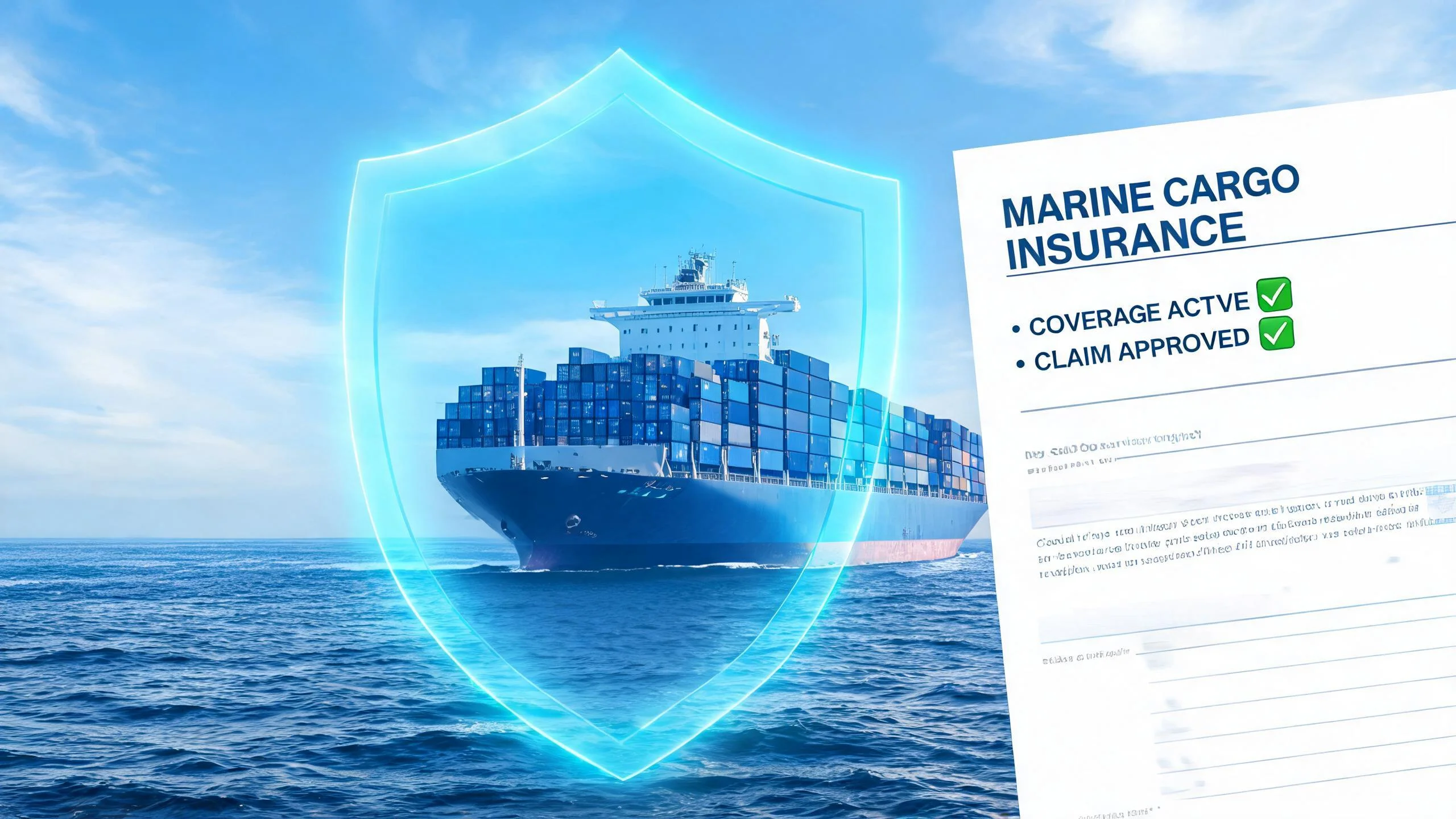
Quick answer: When cargo arrives damaged, there are usually three possible respondents: the carrier under the bill of lading, your cargo insurer under the policy, or the other party to the sales contract under the agreed trade terms. The right path depends on where the damage occurred, which party bore the risk at that point, and what your documents say. Claiming the wrong respondent wastes weeks and can forfeit rights under time limits. This guide maps the routes and the decision framework.
This article covers responsibility paths only. Before choosing one, the evidence must be secured — the routine is set out in our cargo damage evidence checklist, which we will not repeat here.
"Who pays" is three separate questions, each answered by a different document:
| Path | Respondent | Legal basis | Trigger | Typical strength | Typical limitation |
|---|---|---|---|---|---|
| Carrier claim | Ocean carrier or the NVOCC issuing your B/L | Contract of carriage on the bill of lading, backed by carriage conventions | Damage occurred in the carrier's custody; no convention defense applies | No deductible; liability limits rather than exclusions | Package/weight liability caps; convention defenses |
| Insurance claim | Your cargo insurer | The marine cargo policy and its institute clauses | The peril is insured and not excluded | Fast, contractual; insurer handles subrogation | Deductibles, exclusions, policy conditions |
| Contract claim | The other party to the sales contract | The sales contract and the agreed Incoterms rule | Damage before the risk-transfer point, or non-conforming goods | Direct commercial remedy covering quality, quantity, packing | Must prove defect existed at risk transfer; slow to enforce |
A loss can sit on several paths at once — a crushed carton may be a carrier, insurance and, if the packing was always inadequate, partly a seller issue. Section 7 ranks them.
The bill of lading is both a receipt and the contract of carriage. When a container arrives in damaged condition, the carrier is the natural first respondent — the damage was discovered in its custody at discharge. Four points before you file:
A carrier claim works best when the damage is visible at outturn and recorded on the delivery receipt or outturn report.
If the shipment was insured, the policy is often the most efficient route — you hold a direct contractual right against your own insurer, and once it pays, the insurer takes over (subrogates) the recovery action against the carrier. What decides whether this path works:
Our overview of marine cargo insurance coverage and claims covers the options. The two paths are sequenced, not alternatives: claim on the policy where cover is clear, and let the insurer pursue the carrier.
Sometimes carrier and insurer are the wrong respondents, because the defect existed before the goods entered the transport chain — or before risk transferred under the sales contract. The governing logic is the agreed Incoterms rule, which defines where risk passes from seller to buyer:
The trade-terms logic is set out in our guide to international trade terms. And where a dispute is about what was promised rather than what was carried, comparing your freight quotation with the final invoice clarifies whether the claim is commercial or logistical.
The condition of the bill of lading at shipment is one of the most decisive facts in a damage claim.
| Document situation | What it evidences | Effect on a carrier claim | Effect on an insurance claim |
|---|---|---|---|
| Clean B/L | Goods appeared in apparent good order when shipped | Strong: cargo was fine at receipt, so damage occurred in carriage — carrier must explain or invoke a defense | Straightforward: sudden external damage in transit fits insured perils |
| Claused (dirty) B/L | Carrier noted defects — damaged cartons, rusty drums — at shipment | Weak: the carrier pre-declared the condition; damage was not caused in its custody | Difficult: insurer may argue pre-existing condition or insufficient packing |
| Clean B/L, pre-existing damage | Clean receipt obtained despite known defects | Carrier will investigate misdeclaration or packing insufficiency | Insurer survey checks factory condition and loading photos |
Practical consequences: a clean B/L is prima facie evidence of good order at shipment and shifts the burden to the carrier to show a convention defense; a claused B/L is a warning light — shipping anyway without resolving it compromises both claims. And note the mirror document: damage must also appear on the delivery receipt or outturn report at the receiving end. A clean B/L alone does not create a claim; it only supports one.
Shippers often ask for a single number of days for damage notification. There is no honest universal number: the deadline depends on the back clauses of your bill of lading, your policy conditions, and the carriage rules or national law applicable to your trade. What can be said categorically:
Rule of thumb: the moment damage is visible at outturn, written notice goes out the same working day, and the formal deadline is confirmed from that shipment's own documents — not from a generic article.
Use the damage pattern, not instinct. The scenarios below are illustrative patterns, not guarantees — every claim still turns on documents and survey findings.
| Damage pattern | Primary path | Why | Secondary path |
|---|---|---|---|
| Visible external damage, clean B/L, found at container opening | Carrier | Good at shipment, bad at outturn — custody-based liability | Insurance (then subrogation) |
| Water staining, rust or mold inside intact packaging | Insurance first, survey required | Cause unclear — survey decides | Carrier if cause traced to carriage |
| Total loss after vessel incident (fire, grounding, jettison) | Insurance | Classic insured peril; carrier may invoke perils-of-the-sea defense | Carrier within its cap |
| Cartons crushed under badly stowed heavy cargo | Carrier | Stowage fault is squarely within carrier responsibility | Insurance if claim stalls |
| Goods short or wrong inside an intact seal | Seller / contract party | Contents never matched the contract — not a transit event | Insurance usually does not respond |
| Packaging collapsed because the design was inadequate | Seller | Insufficiency of packing is a carrier defense and an insurance exclusion | — |
| Damage found before the risk-transfer point under a destination-delivery term | Seller | Risk had not yet passed between contract parties | Carrier if a carrier leg caused it |
Sequencing habit: secure evidence → notify every plausible respondent in parallel → choose the primary path based on survey and documents → let subrogation handle the rest. Parallel notice costs nothing; betting on one path and discovering weeks later it was wrong can cost the claim.
Q: Can I claim against both the carrier and the insurer for the same damage?
You notify both but recover once — if the insurer pays, it takes over your rights against the carrier by subrogation.
Q: Does a clean bill of lading guarantee a carrier claim succeeds?
No. It is strong evidence of good order at shipment, but the carrier can still invoke defenses such as perils of the sea or insufficiency of packing if the evidence supports them.
Q: Who should I notify first if I am not sure what caused the damage?
Everyone plausibly involved, in writing, as early as possible: the issuer of your transport document, your insurer, and the seller if the trade terms point that way. Notice preserves options; survey findings decide the path.
Q: Is there a standard number of days for notifying cargo damage?
No universal figure applies. Deadlines come from your B/L clauses, policy conditions and the applicable carriage rules, and they differ. Treat the same working day as the practical standard and confirm the formal deadline on your own documents.The seller shipped under FOB and the container arrived damaged. Can I claim against the seller? For transit damage, generally not — risk passed on loading, so your routes are the carrier and the insurer. But if the goods were defective, short or wrongly packed when loaded, a non-conformity claim against the seller remains open.
Q: What if the goods were not insured at all?
Then the carrier claim and, where relevant, a contract claim are the only paths — and the carrier's liability cap becomes the ceiling in most cases. This is usually the moment clients decide to insure the next shipment.
Rules, clauses and deadlines vary by trade and jurisdiction — confirm the specifics on your own B/L, policy and sales contract before filing a claim. This article is operational guidance, not legal advice.
If you are deciding how to pursue a damaged shipment from China, Baton Logistics can map the responsibility path and handle the claim correspondence — contact us with your B/L and damage photos.

Dec 15,2025
If you're a newly established company in the UAE planning to import goods from China and wants to know what are the best products imported to UAE from China. We will share with you the infomation you need step-by-step. China as the factory of th
Jan 02,2025
With global trade continuously growing, more and more companies in UAE are buying and shipping products from China to the UAE. Particularly in sectors like electronics, machinery, and fashion. And selecting the right shipping method
May 30,2024
Whether you're a small business or a multinational corporation, the efficiency and reliability of your supply chain depend greatly on the expertise and capabilities of your chosen freight forwarder.