
Door-to-Door Shipping From China To The World
For direct China→Vietnam, Thailand or Malaysia shipments, Form E (China–ASEAN FTA) is usually the default because ACFTA reached zero tariff earlier on most lines and destination customs know the format well. Choose a Form RCEP certificate instead when your supply chain spans multiple RCEP members — RCEP allows regional cumulation of value across 15 countries, has a 12-month retroactive issuance window, and can offer lower rates on certain chemical, machinery and automotive-part lines. Test both by comparing the exact HS-code rate on fta.mofcom.gov.cn: pick the lower rate; if equal, prefer Form E for smoother clearance. Baton Logistics helps shippers decide before loading and prepares the origin documents as part of China–ASEAN DDP.
| Criterion | What to ask the forwarder | Why it matters |
|---|---|---|
| Rate comparison | "Have you compared my HS code under ACFTA and RCEP?" | The lower rate is not always on the older agreement. |
| Origin qualification | "Does my product meet RVC 40% or CTC under the chosen route?" | Without qualifying, the certificate is rejected at destination. |
| Cumulation review | "Do any of my inputs come from other RCEP members?" | Cumulation can turn a non-qualifying product into a qualifying one. |
| Issuance timing | "Will the certificate be issued before shipment or retroactively?" | Retroactive rules differ between the two agreements. |
| Document consistency | "Do you pre-check certificate data against the invoice and B/L?" | Mismatches void the preference and cause holds. |
| Transit documentation | "If we tranship, what proof of non-processing is needed?" | Direct-transport rules require supporting documents. |
| Digital readiness | "Is electronic origin data accepted at my destination?" | China–Malaysia e-data exchange began in June 2026. |
| Mode and gateway | "Sea, rail or road — which fits my cargo and timeline?" | ASEAN has multiple land and sea gateways. |
| Option | Best for | Typical transit (indicative) | Limitation |
|---|---|---|---|
| LCL sea → Ho Chi Minh / Bangkok / Port Klang | 2–15 CBM | 7–18 days port-to-port | CFS handling adds days |
| FCL sea → Vietnam / Thailand / Malaysia | 15–56 CBM | 5–20 days depending on port pair | Port congestion varies |
| Road freight China→Vietnam | Northern Vietnam, time-sensitive cargo | 3–7 days door-to-door | Border crossing formalities at Pingxiang/Youyi Guan |
| Rail China→Vietnam | Higher volume to Hanoi region | 8–14 days | Less flexible than road |
| Air → SGN / BKK / KUL | Samples, urgent, high-value | 1–3 days | Chargeable weight pricing |
| DDP door-to-door | Buyers without local import capability | Varies | Requires a compliant local importer |
Transit figures are published-service ranges, not guarantees. Add clearance time on top.
Below is hypothetical and for calculation demonstration only. It is not a Baton Logistics shipment record or quotation.
Assume one 40HQ container, furniture components, Shenzhen → Ho Chi Minh City:
| Line item | Illustrative treatment |
|---|---|
| Ocean freight | Quoted per 40HQ |
| Origin certificate | Customs issuance free; agency service fee may apply |
| Duty without preference | MFN rate depends on HS code |
| Duty with Form E / RCEP | Often 0–5%; compare the exact HS-code rate |
| Import VAT / GST | Destination rate applies — Vietnam VAT, Thailand VAT, Malaysia SST/GST as relevant |
| Customs broker fee | Fixed plus per-line charges |
| Port handling | Terminal and documentation charges |
| Inland delivery | Port to factory or warehouse |
| Insurance | All-risk, agreed value |
Why this matters: on a container where the MFN duty is 10–12%, a valid origin certificate can cut that to 0–2% — often the single largest saving available. The certificate costs far less than the duty it removes. Ask for both rates before shipping.
The right origin certificate can remove the largest single cost in an ASEAN shipment. Request a China–ASEAN quote from Baton Logistics — send the HS code, origin of inputs, volume and destination, and our team will compare Form E and RCEP, prepare the documents and give you an itemised landed cost.

Dec 15,2025
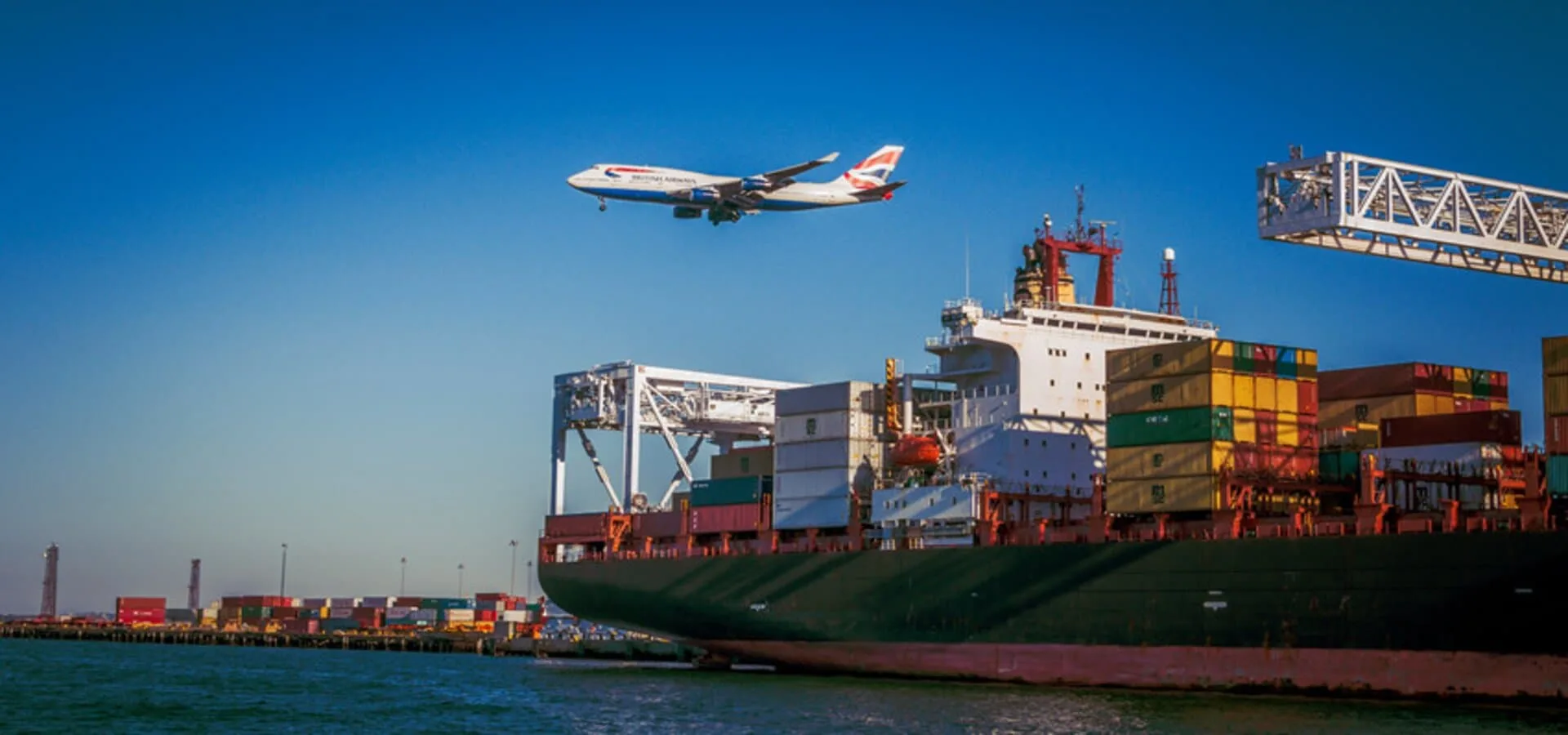
If you're a newly established company in the UAE planning to import goods from China and wants to know what are the best products imported to UAE from China. We will share with you the infomation you need step-by-step. China as the factory of th
Jan 02,2025
With global trade continuously growing, more and more companies in UAE are buying and shipping products from China to the UAE. Particularly in sectors like electronics, machinery, and fashion. And selecting the right shipping method
May 30,2024
Whether you're a small business or a multinational corporation, the efficiency and reliability of your supply chain depend greatly on the expertise and capabilities of your chosen freight forwarder.








 Email:


