
Door-to-Door Shipping From China To The World
Costly delays and other obstacles have long been a headache for the shipping industry in Lagos, a hub. In January, industry stakeholders called for an auction of some 4,000 containers stranded in a bid to ease port congestion. (See article: Attention! More than 4,000 overstayed containers will be auctioned! Port congestion, importers abandon goods!)
But many in the industry say ports to Nigeria's huge market have become more blocked in recent months, with the epidemic and piracy adding to the problem of congestion and chaos.
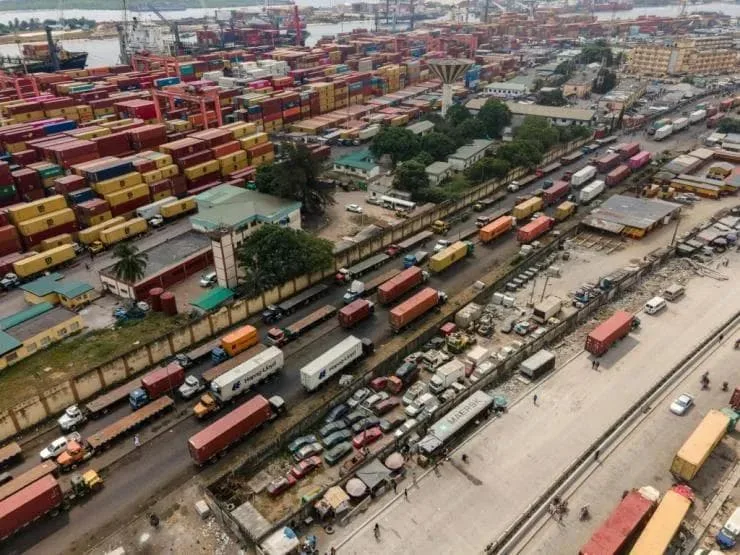
Trucks in Apapa wait to enter the Lagos port
Speaking to AFP on condition of anonymity, company representatives described the congested, chaotic situation at Lagos's port as "utter chaos," "utter disaster," and "absolute chaos."
"Some of our ships have to wait 80 days off the coast before they are allowed to enter the port.This is unacceptable!""Said an operations manager at a major shipping company."Also, due to the unsafe conditions in the coastal areas of Nigeria, ships have had to wait for berthing at Cotonou or Lome."
Last year, each terminal at the port was able to dock six to seven container ships a week, but that rate has slowed to three a week.Container ships, freighters and oil tankers line up in a chaotic, congested port to load or unload, slowly and endlessly.
Port authorities have not yet responded to AFP's request for comment.The operations manager says bottlenecks at the key port are spreading rapidly along the Gulf of Guinea."The situation in Lagos has caused congestion at all ports in the region, from Cote d 'Ivoire Abidjan in Ivory Coast to Point-Noire in Congo-Brazzaville."
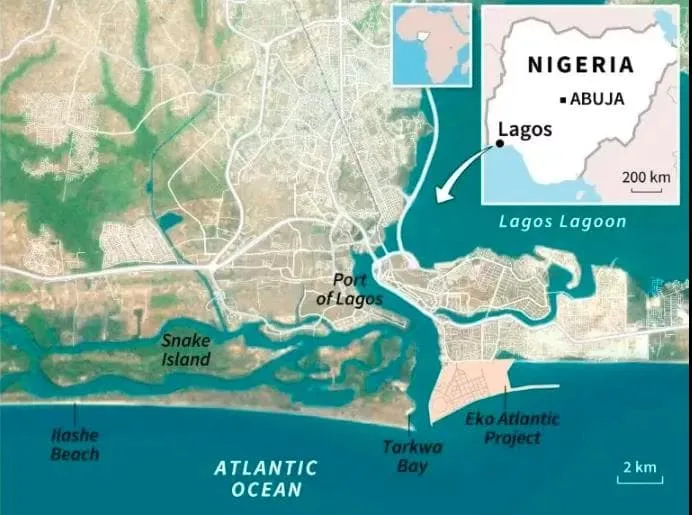
Lagos is Nigeria's economic capital of 20 million people, and the port accounts for most of the country's exports and imports, feeding a market of 200 million people.
Early last year, before the outbreak, 99 percent of Nigeria's exports and 89 percent of its imports passed through its ports, almost all of them through Lagos port.
Lagos's port activities stretch from Apapa to Tinkham and are Nigeria's second largest source of revenue after oil. Nigeria is losing an estimated $55 million (46 million euros) a day due to congestion, according to Dutch consultancy Dynamo.
Neighbouring Togo, with a population of just 8m, is now the region's biggest container port by volume.
- Structural problems -
With Nigeria's growing population, "imports have been increasing every year, but last year they dropped by about 40 percent because of the epidemic, the blockade in October and the demonstrations, and now it's causing more congestion," said Pascal Jarrouj, commercial director at GMT Nigeria Limited, a logistics service provider based in Lagos.
The economic and social crisis caused by the outbreak is due to the port's long-standing structural problems -- lack of infrastructure and investment, dilapidated roads, and a reputation for corruption at all levels.
Limited space to unload containers, manual handling of goods, and searches by customs agents all slow down processing. About 2,000 trucks pass in and out of the port every day. The 20 or so checkpoints that dot the exit road, manned by police, customs, contingents and others, are rife with bribery.
- Huge expense -
"Before, trucks could be shipped for 400,000 naira ($1,050/876 euros); Now, 1.3 million naira is needed... By December it had even gone up to 1.7 million naira!" Even more infuriating is the cost of trucks sitting in traffic jams for days extorted by criminals and officials
"There is no fixed logistics rate at the port, it depends on the chaos," says a private transporter who has worked in Apapa for 17 years. And it depends on who can afford to pay more. The combined cost of official and offline transport directly affects commodity prices, which in turn affects consumer prices.
And all this at a time when many are already struggling with high unemployment and double-digit inflation after the blockade.
Nigeria's richest man, Aliko Dangote, said he lost nearly 55 million euros between 2017 and 2018 due to port congestion.
Only the top oil producers or multinationals seem ready and able to absorb these losses. But most companies cannot survive such a challenge. Many will think twice before trying to conquer Nigeria's huge market.
At the end of February, the Nigerian Ports Authority set up a digital platform, ETO, where truck drivers can register. In theory, the truck drivers will be notified once the container at the port is ready to pick it up. But two weeks after its launch, drivers are complaining that the platform is a disaster; There is already an emerging black market for documents that shippers need to register on the app. One source said: "The problem is that too many people want to profit from the chaos. There's just no incentive to solve the problem."
Dec 15,2025
If you're a newly established company in the UAE planning to import goods from China and wants to know what are the best products imported to UAE from China. We will share with you the infomation you need step-by-step. China as the factory of th
Jan 02,2025
With global trade continuously growing, more and more companies in UAE are buying and shipping products from China to the UAE. Particularly in sectors like electronics, machinery, and fashion. And selecting the right shipping method
May 30,2024
Whether you're a small business or a multinational corporation, the efficiency and reliability of your supply chain depend greatly on the expertise and capabilities of your chosen freight forwarder.









 Email:


