
Door-to-Door Shipping From China To The World
1. Container classification and introduction
With the continuous development of container transportation, different types of containers have appeared in order to meet the needs of loading different kinds of goods. Let me summarize with you today.
Classified by materials used
According to the material used in the main parts of the box (side wall, end wall, top, etc.), it is called the container made of the material. According to the classification of the materials used, the container can be divided into three kinds:
(1) aluminum alloy container, the advantages are light weight, beautiful appearance, anti-corrosion, good elasticity, convenient processing and processing costs, low repair costs, long service life; The disadvantage is that the cost is high and the welding performance is poor.
(2) steel container, the advantages are high strength, structure is firm, high weldability, good water tightness, low price; The disadvantage is that the weight is large and the corrosion resistance is poor;
(3) glass steel container, the advantages are high strength, good rigidity, large content, heat insulation, corrosion resistance, good chemical resistance, easy cleaning, simple repair; The disadvantage is that the weight is large, easy aging, screw the strength of the bolt is reduced.
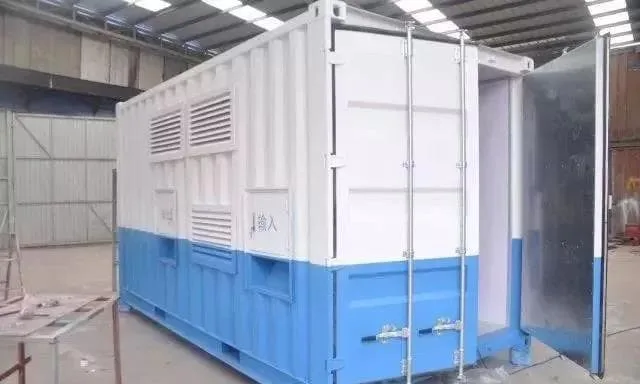
Classification by structure
Containers can be divided into three categories according to their structure:
(1) Interior post type container and outsider post type container, mainly refer to aluminum alloy container, and inner post type container refers to the side column (or end column) located in the inverted wall or end wall;The outer column container means that the side column (or end column) is located outside the inverted wall or end wall;
(2) collapside container, which refers to the main parts of the container (side wall, end wall and top) can be easily folded or collapsed and easily recombined when used again;
(2) Monocoque container (Monocoque container), is the composition of all parts of a steel body, it has the advantage of light weight, can adapt to the torque occurred without causing permanent deformation.
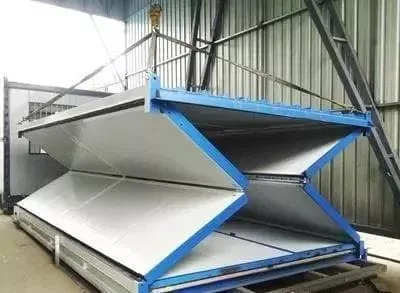
Classified by purpose
1 dry container
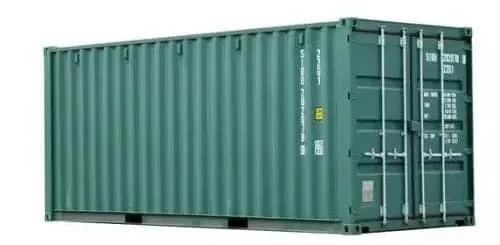
Ordinary containers, also known as dry containers, are mainly used for the transportation of groceries, pharmaceuticals, textiles, handicrafts, chemical products, hardware, electronic machinery, instruments and machine parts, etc. This kind of container accounts for 70 ~ 80% of the total number of containers. In addition to frozen goods, live animals, plants, in terms of size, weight and other suitable for container transport of goods, can be used dry cargo containers.
2 Reefer container
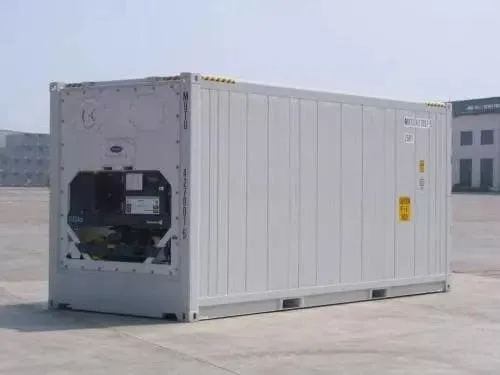
Reefer container (Reefer container) is divided into two types: external and built-in. The temperature can be adjusted between -60℃ and +30℃. Built-in container in the process of transportation can be free to start the freezer, so that the container maintains the specified temperature; The external type must rely on special container vehicles, ships and special yard, station equipped with refrigerators to refrigerate. This box is suitable for transporting butter, chocolate, frozen fish, condensed milk, margarine and other items in summer.
3 Open top container
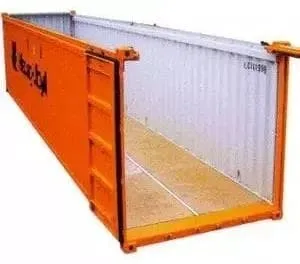
Say again open top containers, open top containers, open top containers, open top container), the container no roof, but have a collapsible top beam support canvas, plastic sheeting or plastic coated cloth canopy, available from the roof above the crane loading and unloading of cargo, open top tank top can be opened or not fixed to the container, covered with waterproof cloth top, at the time of shipment, the requirements of the watertight and dry container. Suitable for loading glass plate, steel products, machinery and other heavy cargo.
4 Flat Rack Containers
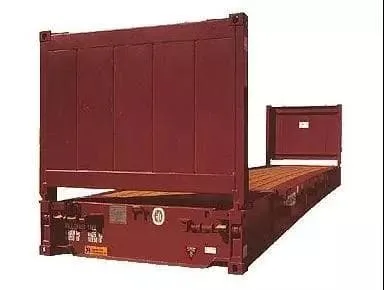
Flat Rack Containers have no top or sides and are typically loaded and unloaded from the side of the container. It is also easy to carry livestock, as well as unpacked goods such as steel, which are exempt from external packaging. It can also be convenient for hoisting of large and super wide and super high goods.
5 Pen Container
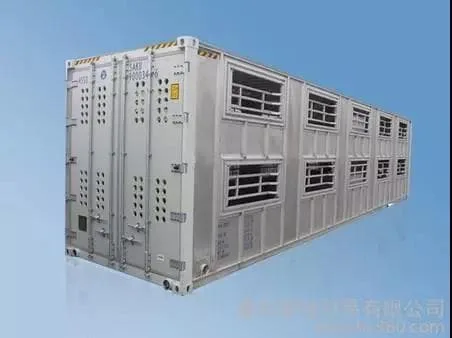
Pen Container This kind of box has metal mesh on the side, good ventilation, and easy to feed. It is a special container made for carrying live animals such as cattle and horses.
6 Tank container
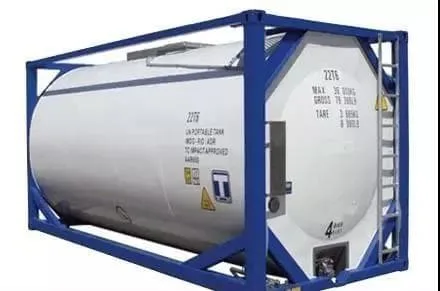
Tank container (tank container) also known as liquid container. It is a special container made for transporting liquid goods such as food, medicine and chemicals. Its structure is fixed in a metal frame on a liquid tank. The International Standard Tank is a stainless steel pressure vessel mounted in a fastening external frame. Most of the tank's inner bladder is made of 316 stainless steel. Most tanks have steam or electric heating devices, inert gas protection devices, pressure relief devices, and other optional equipment for fluid transport and handling.
7 Platform container
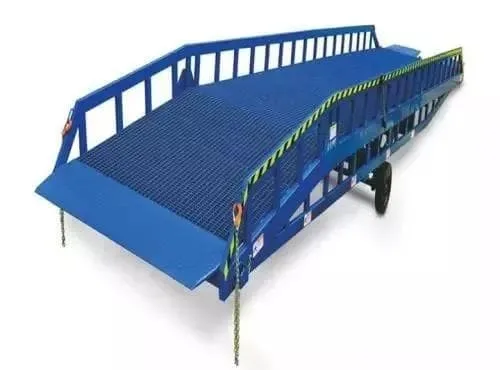
Platform container is similar in shape to railway flat car. It is a container with a high bearing capacity and a bottom plate and no superstructure. Suitable for heavy and long cargo, up to 6 meters in length, 4 meters in width, about 4.5 meters in height, weight up to 40 metric tons. And the two platform containers can be linked together, holding 80 metric tons of goods, this kind of box is very convenient to load cars.
8 ventilated container
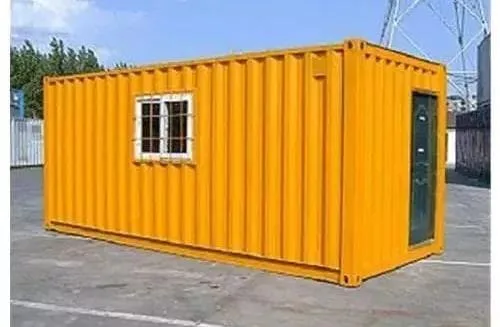
ventilated container is provided with 4-6 ventilation holes, and the inner wall is coated with plastic layer, which is suitable for holding fresh vegetables and fruits and other goods which are afraid of heat and stuffy.
9 insulated container
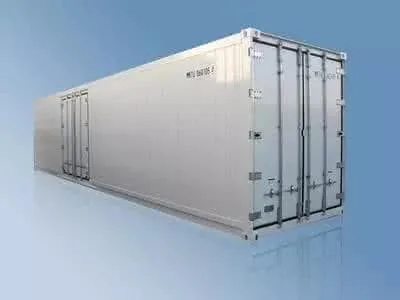
There is an insulating layer inside the insulated container and an inlet and outlet on the top which can adjust the Angle, so that the temperature inside the container can be adjusted by the outside air and wind, and it can be insulated from the influence of the outside temperature for a certain time when the container is closed. Suitable for loading goods sensitive to temperature and humidity.
10 Bulk containers
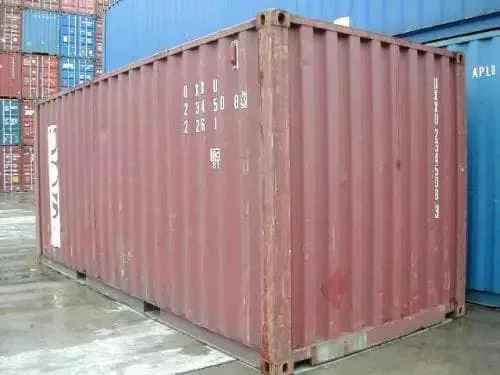
Bulk containers are usually equipped with 2 to 3 small hatches at the top for loading. There is a lift frame at the bottom, which can be raised at an Angle of 40° for unloading. This kind of box is suitable for bulk cargo such as grain and cement. If you want to carry out plant quarantine, but also in the box fumigation cabin steam washing.
11 Freeflowing bulk material containers
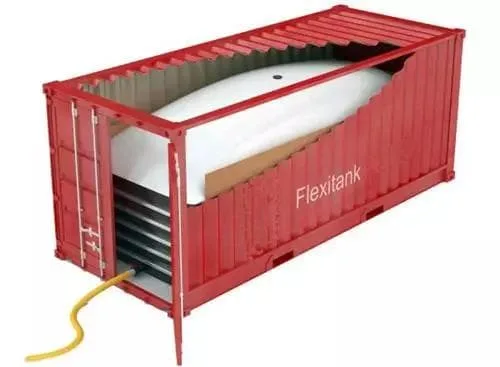
Freeflowing bulk material containers are basically the same as bulk containers, but in loading and unloading nozzles and pipettes are used.
12 Dress hanger containers
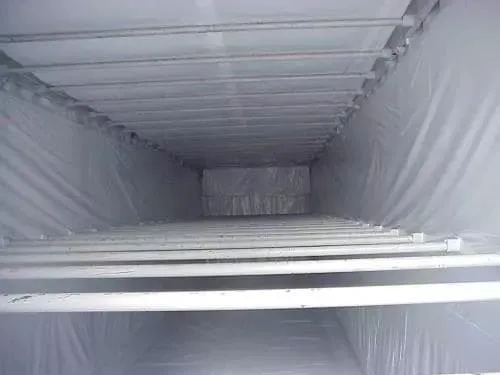
Dress hanger containers are suitable for shipping clothing goods. With the development of international trade and the constant change of commodity structure, there will be various types of special or multi-purpose containers in the future.
Dry container commonly used internationally
1. The external dimension is 20 feet X8 feet X8 feet 6 inches, referred to as 20 feet container;
2, 40 feet X8 feet X8 feet 6 inches, 40 feet container for short;
3, 40 feet X8 feet X9 feet 6 inches, referred to as 40 feet high cabinet (more used in recent years).
20-foot container: the content volume is 5.94m x 2.34m x 2.39m, the gross weight of distribution is 28.25 tons at most, and the volume is 33 m3.
40 feet container: the content volume is 12.06 meters X2.34 meters X2.39 meters, the gross weight of distribution is 28.8 tons at most, the volume is 67 cubic meters.
40 feet high cabinet: the content volume is 12.06 meters X2.34 meters X2.69 meters. The maximum gross weight of distribution is 30.2 tons and the volume is 76 cubic meters.
45 feet high container: content volume :13.5 meters X2.34 meters X2.71 meters, gross weight of distribution is 27.7 tons at most, volume is 85 cubic meters.
20 feet open top container: content volume is 5.89m x 2.32m x 2.31m, gross weight of distribution is 20 tons, volume is 31.5 m3.
40 feet open top tank: content volume is 12.01m x 2.33m x 2.15m, gross weight of distribution is 30.4 tons, volume is 65 cubic meters.
20 feet flat bottom container: content volume 5.85m x 2.23m x 2.15m, gross weight 23 tons, volume 28 cubic metres.
40 feet flat bottom container: content volume 12.05 m X2.12 m X1.96 m, gross weight 36 tons, volume 50 m3.
2. Password and identification of containers
Container code
Container (Container), usually we also call it "CONTAINER", is a large CONTAINER with a certain strength, stiffness and specifications for turnover use. There are many categories of containers and their uses are very different. Today we're going to talk about some of the little things that you might not know.
-- Container No
(No. Container for Export Cargo)
The standard container number consists of 11 digit codes
There are three parts
The first part consists of four English letters. The first three codes mainly describe the container owner, the operator, the fourth code describes the type of container.
The second part consists of six digits. Is a container registration code, used to hold a container unique identification.
The third part is the check code, which is obtained by the first four letters and six digits after the operation of the check rule. It is used to identify whether the error occurs during the check. That's the eleventh digit.
What are the common sizes and boxes of containers?
20GP, 40GP and 40HQ are the three most commonly used containers
1) The dimensions of 20GP are: 20 feet long X 8 feet wide X 8.5 feet high, referred to as 20 feet general cabinet
Loading notice:
1. Under any circumstances, when the goods are loaded into the container, the weight of the goods in the container shall not exceed the maximum loading capacity of the container, that is, the total amount of the container minus the weight of the container. In general, the gross weight and dead weight are marked on the door of the container.
2. The unit weight of each container is certain, so when the same goods are loaded in the box, as long as the density of the goods is known, it can be determined whether the goods are heavy or light.
3. When loading, the load on the bottom of the box should be balanced. In particular, the center of gravity of the load should be strictly prohibited at one end.
4. Avoid concentrated loads. "For example, when loading heavy goods such as machinery and equipment, the bottom of the box should be covered with wooden boards and other gasket materials to disperse the load as far as possible.
5. When loading goods by manpower, please pay attention to whether the packaging has "not upside down", "flat", "vertical" and other loading and unloading signs. Loading tools must be used correctly. Hand hooks are prohibited in baling.
6. When loading the pallet goods, it is necessary to accurately grasp the size inside the container and the external size of the package of goods, so as to calculate the number of loading pieces, so as to achieve the purpose of reducing the abandonment and loading more goods.
7. When using fork loading and unloading vehicles, it will be restricted by the free lifting height of the machine and the height of the door frame. Therefore, if the conditions permit, the forklift packing can be loaded two layers at a time, but the upper and lower to leave a certain gap. In addition, it should be noted that the cargo should be underlaid with wooden padding so that the forks can be pulled out smoothly.
8, the goods had better not be naked, at least there should be packaging, not blindly to save space and lead to damage to the goods. General goods will also have packaging, only such as large machines such as boilers, building materials and so on will be more troublesome, must be tied, tied to prevent loose.
In addition, the general use of the ordinary lifting weight of 2 tons of fork truck, its free lifting height is about 1250px. But there is also a completely free elevation
30 practical container knowledge!
1, big cabinet, small cabinet, double back refers to what?
Large containers generally refer to 40 ft containers, usually 40GP and 40HQ.The 45-foot container is usually considered a special container.
A small container generally refers to a 20 foot container, usually 20GP.
Double-back refers to two 20-foot lockers.One tow truck pulls two 20-foot lockers at the same time.During port lifting, two 20-foot containers are hoisted onto the ship at a time.
What does LCL mean?The whole case?
Less than Container Load refers to a Container with more than one owner of the goods, Less than a full Container of small quantities of goods is LCL, according to the LCL (LCL) operation.
Full Container Load (FCL-FCL) refers to a Container containing only one shipper or manufacturer's goods. FCL-FCL refers to a larger volume of goods that can be filled with one or more Full containers.
3. What are the common specifications of containers?
40 'High Cabinet (40HC) : 40' long, 9 '6 "high;About 12.192 meters long, 2.9 meters high, 2.35 meters wide, generally about 68CBM loading.
40 foot cabinet (40GP) : 40 feet long, 8 feet 6 inches high;It is about 12.192 meters long, 2.6 meters high and 2.35 meters wide, and generally carries about 58CBM.
20 foot cabinet (20GP) : 20 feet long, 8 feet 6 inches high;About 6.096 meters long, 2.6 meters high, 2.35 meters wide, generally about 28CBM loading.
45 'High Cabinet (45HC) : 45' long, 9 '6 "high;It is about 13.716 meters long, 2.9 meters high and 2.35 meters wide. Generally, the cargo is about 75CBM.
4. What is the difference between high cabinet and general cabinet?
The high cabinet is 1 foot higher than the general cabinet.No matter high cabinet or general cabinet, length and width are the same.
5. What does the weight of the box mean?&heavy container?
Body weight: The weight of the box itself.The dead weight of 20GP is about 1.7 tons, and that of 40GP is about 3.4 tons.
Heavy cartons: full cartons, as opposed to empty cartons/cartons.
6. What are empty or auspicious cartons?
Cartons without cargo are called empty cartons. In South China, especially in Guangdong and Hong Kong, empty boxes are usually also called auspicious boxes, because in Cantonese, empty and evil sound the same, which is unlucky. Therefore, South China is not called empty boxes, but auspicious boxes. The so-called tiji is also heavy, is to extract the empty box, pull to load, and then return the heavy box after loading the goods.
7. What is a heavy box? What about the heavy boxes?
Carrying heavy containers: refers to carrying heavy containers at the yard station to the factory or logistics warehouse to unload (usually import).
Dump container: means to drop the heavy container back to the yard after loading the goods in the manufacturer or logistics warehouse (generally pointed out at the port).
8. What does carrying empty boxes mean? What does empty container mean?
Carrying empty containers: refers to carrying empty containers to the manufacturer or logistics warehouse for loading (usually pointed out the port) at the yard.
Empty container: refers to the factory or logistics warehouse after unloading the goods to the station to drop the container (usually refers to the import).
9. What box type does DC stand for?
DC refers to Dry containers. 20GP, 40GP, 40HQ and other containers are all Dry containers.
10.What type of box does OT stand for?
OT is short for Open Top. It refers to the cabinet with no Top and only a tent on Top of the box.
11.What does it mean to open the door half-way?
Container with half door.
12.What is the number of the bill of lading?
Usually, the freight forwarder gives you the packing number, which may be the MBL or HBL. In general, the packing can only be done according to the name of the vessel/voyage and the B/L number. In other words, empty or heavy containers are taken.
13.What is the case number/container number?
Refers to the number of a container, which is unique in the world and consists of four letters and seven numbers. The first three letters are the master (shipping company or chartering company) code, the fourth letter is U, the next six numbers are serial numbers, and the last number is the check code.The box number is usually asked to the driver, because the driver did not know the box number until he went to pick up the box. The box number should be used when customs declaration, document making and warehouse receipt entry.
14. What does the seal number mean?
It refers to the number of the seal that locks the door of the container. The lead seal is generally provided by the shipping company and needs to spend money to buy it. It is usually 50 yuan per seal.
15.What do export goods mean?
Back the empty containers to the factory or logistics warehouse to load the goods, and then declare for export.
16.What do imports mean?
Is after the import customs clearance, at the yard station back to the factory or the designated place to unload.
17.What is empty driving?
Refers to the vehicle arrived at the factory or logistics warehouse, due to various reasons can not load the empty container back to the station.
18.What does unpacking mean?
To move boxes from one yard to another at a yard, or to remove the top boxes and pick up the boxes that are pressed down instead of picking them up from top to bottom. This is more likely to happen when specifying a package number or customs inspection.
19.What is a container terminal?
Usually refers to the place where boxes are stacked and managed on or near the wharf. The driver usually carries the boxes to the yard station. Correspondingly, there is a thing called the station receipt, and the delivery container between the station and the driver is handled with the station receipt.
20.What does the bill of lading usually contain?
The contents of the bill of lading usually include the bill of lading number, the name of the vessel, the number of boxes, the description of the goods, the number of pieces, the gross weight, the volume, the number of boxes, the issuer and the signature, etc.
21. What should be paid attention to when assigning work?
Explain to the car owner whether to export or import, box type, box quantity, weight, location, station and whether to agree or not, time to manufacturer, special requirements of boxes, etc.
22. What should be paid attention to when writing the car dispatch list?
To write as clear as possible, because some drivers do not know the English alphabet, the name of the ship, voyage, bill of lading number, station, time of arrival, the manufacturer's address, contact phone number, special requirements of the box and manufacturer must be written clearly. Have the invoice title also want to write clearly, do not let the driver drive the wrong title. In addition, we should also write down the problems that should be paid attention to. For example, some goods have very strict requirements on the cabinet, so we must make it clear to the driver, so as not to make it clear to the driver when the cost is incurred.
23. What does the equipment interchange order mean?
When you pick up the luggage at the exit, you should make a single first, and then get a copy of the "Equipment Interchange Order". The driver can pick up the luggage, exit, enter and return the luggage with this equipment interchange order.
24.When is the loading time at the export terminal?
B: usually 10 o 'clock, but usually by 9 o 'clock there is no one at the place where the orders are processed, so the import workers have to come back around 8 o 'clock, because the driver has to drop off the boxes first.
25.What does overload mean? Overweight?
Overload: generally refers to the tonnage of the goods loaded on the car exceeds the weight limit of the vehicle;
Overweight: It is to point to place to load cargo tonnage to exceed the limit weight of container commonly.
26.What does packing and unpacking mean?
Loading, "loading," means carrying empty containers to load goods.
Unloading is carrying a heavy container to the factory.
27.What does it mean to go back again?
It means to go and pull the goods back, not empty, not empty.
28.What does weight charge mean?
The "weight charge" at the high-speed Toll Gate refers to the toll according to the weight and tonnage of the car.
29.What do you mean by container damage charges?
Refers to the expenses incurred when the imported cases are found damaged after unloading.
30.What does the washing charge mean?
Refers to the case cleaning charges caused by uncleanness of the case.
Dec 15,2025
If you're a newly established company in the UAE planning to import goods from China and wants to know what are the best products imported to UAE from China. We will share with you the infomation you need step-by-step. China as the factory of th
Jan 02,2025
With global trade continuously growing, more and more companies in UAE are buying and shipping products from China to the UAE. Particularly in sectors like electronics, machinery, and fashion. And selecting the right shipping method
May 30,2024
Whether you're a small business or a multinational corporation, the efficiency and reliability of your supply chain depend greatly on the expertise and capabilities of your chosen freight forwarder.









 Email:


