
Door-to-Door Shipping From China To The World
Quick answer: A container is "rolled" when the carrier accepted your booking but did not load it on the intended vessel, so the box sails later — sometimes a week, sometimes much longer on transshipment routes. Rolls happen because of overbooking, port congestion, missed cut-offs, documentation problems, equipment shortages and priority rules inside the carrier's allocation. A roll costs you an ETA slip, possible additional charges and downstream delivery risk. You cannot make it impossible, but you can make it less likely.
This guide explains what rolling actually is, why carriers do it, what it costs, what to do the moment it happens, and which booking practices measurably reduce the risk when shipping from China.
"Rolled" (or rollover) describes a specific event: a confirmed booking exists, the container was delivered or ready, but it was not loaded on the named vessel. Three neighboring situations are often confused with it:
| Situation | What happened | Is it a roll? |
|---|---|---|
| Rolled by carrier | Booking confirmed, container ready, carrier loaded someone else's box instead | Yes — carrier-side |
| Missed cut-off | Container reached the yard after the documented cut-off time | No — shipper-side, often bundled under the same frustration |
| Vessel omission / skipped port call | The vessel itself skipped the port or the string was adjusted | Yes — carrier-side network decision |
| Customs or document hold | Container stayed in the yard because release or export declaration was not cleared | No — a clearance problem, not a load problem |
The distinction matters because it determines who bears the consequences and what you can ask the carrier for. A carrier roll is a load-allocation decision; a missed cut-off is a timing failure on your side; a document hold is fixable only at the document level. Many "rolled" complaints are actually one of the other three — diagnose the real cause first.
Carriers accept bookings in advance while actual show-up rates vary and vessels depart on fixed schedules. When confirmed demand exceeds the space actually available, someone gets rolled. The recurring causes:
| Cause | Mechanism | Typically hits |
|---|---|---|
| Overbooking | Carriers accept bookings above nominal slot capacity to compensate for no-shows; when show-up is high, surplus boxes roll | Spot and mid-tier contract bookings in peak season |
| Port congestion | Yard congestion, berthing delays and slow discharge leave vessels less room or time to load | Congested transshipment hubs and gateway ports |
| Missed cut-off | Cargo delivered after the gate, VGM or documentation cut-off; the loading plan closes without it | Late factory production, trucking shortages, last-minute changes |
| Documentation problems | Amendments not processed, VGM missing, hazardous or OOG paperwork incomplete at plan cut | Shipments with late or repeatedly amended details |
| Equipment shortage | Empty containers are repositioned to higher-yield trades; bookings confirmed but no box available | 40'HC in peak season on popular trades |
| Allocation priority | Within a carrier's own book, higher-tier contract customers and NVOCC volume agreements load first | Low-yield spot bookings and small shippers |
Two structural realities sit behind all of these. First, the carrier controls the loading plan, and a confirmed booking is generally not a guarantee of loaded space — most lines' booking terms say so. Second, priority is opaque: two shipments at the same terminal on the same day can be treated differently depending on whose contract the space was sold under.
The ocean freight itself usually does not change — but the surrounding costs and risks move:
For the carrier, a roll is a capacity-management event; for you, it is a delivery-commitment event — which is why prevention is worth more than compensation.
A roll is recoverable if handled within the first day or two. Work the sequence:
| Step | Action | Why it matters |
|---|---|---|
| 1 | Confirm the diagnosis. Verify with the carrier or your forwarder that the box was genuinely rolled — not cut-off-missed, not document-held, not an omission. Get it in writing. | Determines cost attribution and your negotiating position |
| 2 | Secure the next loading. Ask which sailing the container is now planned on; get the new booking reference and ETD confirmed in writing. | First-loaded-first-served is the default; without written confirmation you are rolled again silently |
| 3 | Re-verify the full chain. New ETD → transshipment connection → new ETA → cut-offs on the replacement vessel. | Second rolls cluster when nobody re-checked the new service's timing |
| 4 | Assess charges and attribution. Ask which charges, if any, arise from the roll and under which clause — before they appear on an invoice. | Attribution depends on cause and contract; see section 5 |
| 5 | Notify the buyer or warehouse. Give the revised ETA with a buffer; for retail and e-commerce, check inbound appointments. | Delays compound when downstream parties learn late |
| 6 | Evaluate alternatives before committing. For time-critical cargo, price the options: another carrier's next sailing, a different routing, or partial air freight for the critical portion. | Alternatives worsen fast — competing services fill within hours in peak season |
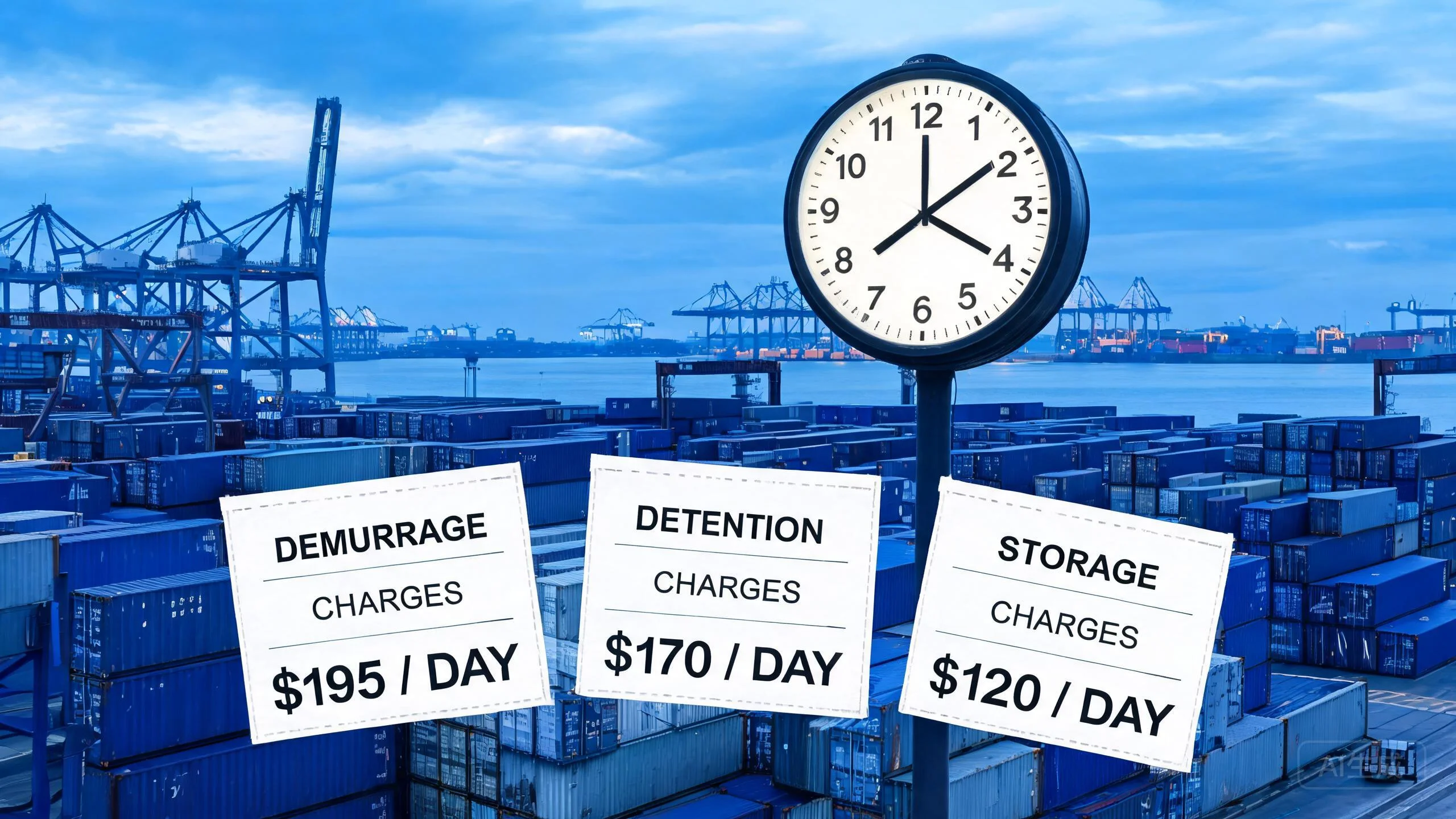
If the roll pushed the container into yard storage beyond the free period, the fee logic is the same as any terminal delay — how demurrage, detention and storage accrue and who typically bears them applies directly.
There is no single rule, and any article claiming "the carrier always pays" or "the shipper always pays" is wrong. Attribution follows two questions: what caused the roll, and what does your booking or service contract say?
Practical posture: ask early, ask in writing, and ask "under which clause" rather than "will you pay". Amounts are negotiable and policy-driven; they are not fixed tariffs you can look up.
Rolls cannot be eliminated — capacity is allocated by carriers whose incentives differ from yours — but the risk can be compressed:
None of these guarantee a booking loads — but together they remove most shipper-side roll causes and raise your priority for the carrier-side ones.
Q: What does "container rolled" mean exactly?
The carrier accepted your booking and your container was ready, but it was not loaded on the intended vessel. It is planned onto a later sailing instead. A confirmed booking is a capacity reservation, not a guarantee of loaded space on a specific voyage.
Q: How long does the delay from a roll usually last?
It depends on service frequency: a weekly string typically adds about a week; biweekly services add two; transshipment routings can lose more if a feeder connection is missed. Get the new ETD and ETA in writing rather than estimating.
Q: Does the shipping line pay compensation for rolling my container?
Usually not directly. Booking conditions typically limit delay liability and exclude consequential losses. Expect re-loading on the next sailing and, for carrier-side causes, a discussion about who bears roll-related terminal charges — attribution depends on cause and contract.
Q: Is a roll the same as missing the cut-off?
No. A roll is a carrier-side allocation decision. Missing the cut-off is a shipper-side timing failure with similar consequences but different cost attribution. The two are often confused, which is why confirming the diagnosis is step one.
Q: Can I reduce the risk to zero?
No. Even top-tier contract volumes get rolled in extreme congestion. But early booking, disciplined cut-off management, verified booking confirmations and stable direct services remove most controllable causes and improve your allocation priority for the rest.
Q: Should I switch to air freight after a roll?
Only when the delivery commitment justifies the cost gap. Ask: does the buyer's penalty, the promotion or the production stoppage cost more than the air premium? If not, the revised ETA with a buffer is cheaper. Full comparison in our FCL/LCL/air guide.
Service networks, surcharge items and carrier policies change frequently by trade lane. Confirm current booking conditions, cut-offs and charges with the carrier or your forwarder at booking time. This article is operational guidance, not a statement of any carrier's policy.
Shipping time-sensitive cargo from China during peak season and want a booking plan that survives congestion? Baton Logistics can map the cut-off chain, verify allocations and set up contingency routes — send us your shipment details for a booking plan.

Dec 15,2025
If you're a newly established company in the UAE planning to import goods from China and wants to know what are the best products imported to UAE from China. We will share with you the infomation you need step-by-step. China as the factory of th
Jan 02,2025
With global trade continuously growing, more and more companies in UAE are buying and shipping products from China to the UAE. Particularly in sectors like electronics, machinery, and fashion. And selecting the right shipping method
May 30,2024
Whether you're a small business or a multinational corporation, the efficiency and reliability of your supply chain depend greatly on the expertise and capabilities of your chosen freight forwarder.