Door-to-Door Shipping From China To The World
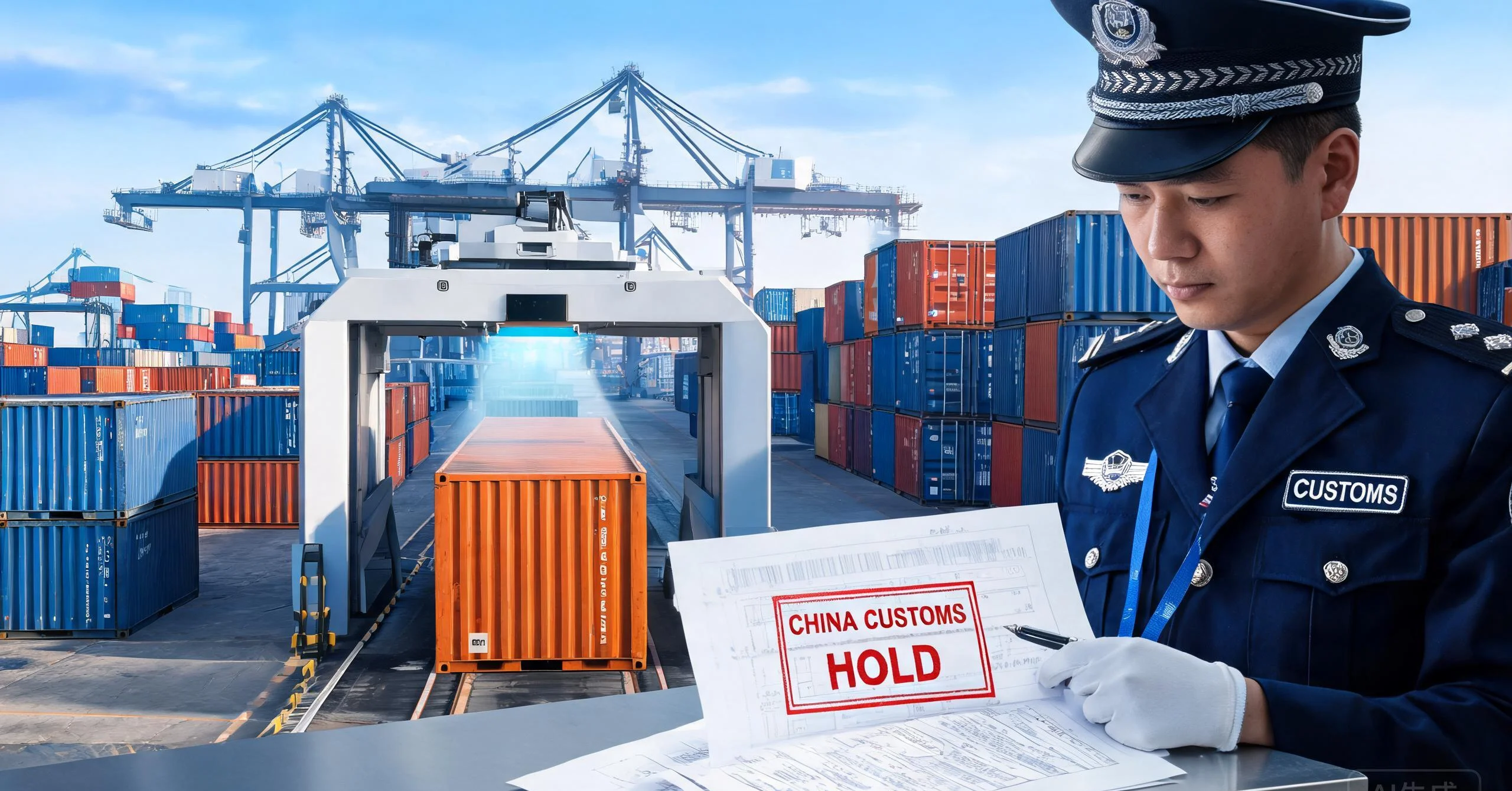
Quick answer: A customs examination is the physical or scanned inspection of imported cargo after an entry has been filed. It typically happens at escalating levels: an X-ray/scan examination that reads the container without unloading it, a tail gate exam that opens the doors and inspects what is visible, and an intensive (full) examination that unloads and checks the goods against the declaration. Selection is driven by risk targeting and random sampling, examinations usually add hours to days of delay, and the port, terminal and labour charges involved are commonly borne by the cargo owner.
This guide describes the examination levels as commonly practised at US ports and explains what an importer should actually do when a container is selected. Port mechanisms and charges differ by country — always defer to the local customs authority and terminal's published rules.
Every import entry passes through customs review, but only a fraction move on to physical or scanned examination. The review sequence commonly looks like this:
For importers, the key mindset shift is this: an examination is a verification activity, not an accusation. Many examinations find nothing wrong. What turns a routine exam into a costly problem is almost always something the importer controls — inconsistent documents, a container that arrives before its paperwork is ready, or no plan for the storage clock that starts running while the cargo sits under exam.
Understanding the sequence also helps you read the situation correctly. When your broker reports a hold, the first questions are: which examination type, at which terminal, and what does each party need to provide? The answers determine whether the event costs you two days or two weeks.
The following table describes the levels as commonly practised in the United States. Other countries use similar concepts — scan-first triage, partial opening, full unload — but names, procedures and sequencing differ, so treat this as a framework rather than a global rulebook.
| Level | How it is triggered | What is checked | Interruption to cargo | Typical time frame |
|---|---|---|---|---|
| X-ray / scan examination | Automated or targeted selection; container routed through scanning without unloading | Image of container contents reviewed against the declaration; anomalies or dense/descriptive mismatches escalate the case | None — goods are not touched | Hours to a day, subject to terminal queue |
| Tail gate examination | Follow-up to a scan or a targeted hold; customs opens the container doors | Only what is visible from the doorway: packaging, marking, first-visible cargo, load pattern consistency | Low — doors opened, goods not unloaded | Hours, plus terminal handling time |
| Intensive / full examination | Escalation from earlier levels, or direct targeted selection | Cargo unloaded and compared line by line against invoice, packing list and declarations; piece counts, weights, descriptions, possibly samples | High — container stripped, sometimes held until re-stuffed | Days to longer, depending on port workload and findings |
A few practical notes on each level:
Importers often assume examination selection is arbitrary. Some of it is, but most selection flows from identifiable drivers:
The takeaway is that importers influence most of these drivers. You cannot change your commodity, but you can make your documents accurate, your values defensible and your history clean — and that is where the exam-rate lever sits.
This is the question importers ask first, and the honest answer is: the cargo owner commonly bears the examination-related charges, but the exact fees and mechanisms are set by each port and terminal, not by a global rule.
The charge categories typically include:
Two distinctions matter commercially. First, examination charges are separate from penalties. If the exam finds nothing wrong, you still typically owe the handling and storage charges; penalties apply only when violations are found. Second, examination storage interacts with the port's free-time clock. If the container was already accruing demurrage at the terminal when the hold was issued, exam time can extend the exposure — and whether the carrier or terminal grants relief for exam days depends on the carrier's policy and the port's rules, not on a universal entitlement. Our guide to demurrage, detention and storage explains how these clocks run and how exam holds interact with them.
Practical consequence: before you ship, know the exam-charge structure at your destination port. A quote that ignores the possibility of exam charges is not a landed-cost estimate; it is an optimistic one.
When the broker reports a hold, work through this sequence rather than reacting to the delay.
| Step | Action | Why it matters |
|---|---|---|
| 1 | Confirm the exam level and location | Determines expected duration, charge types and who at the terminal handles the case |
| 2 | Verify the document set is complete and consistent | Most exams stall because the invoice, packing list or permit is incomplete — not because of the cargo |
| 3 | Ensure the broker can answer classification and valuation questions | Exam officers compare goods to the declaration; the broker needs the data behind every line |
| 4 | Keep the cargo and declaration matched | No verbal "it's basically the same product" — if the paperwork and cargo differ, resolve it before the exam, not during |
| 5 | Track the storage clock and ask about relief policy | Know when exam-site and terminal charges start, and whether the carrier grants exam-day relief |
| 6 | Record the outcome and update your history | A clean exam result is an asset; a discrepancy found is an input to fixing the next shipment |
Two behaviours reliably make examinations worse. The first is arguing the process with the terminal — the exam is a customs decision, and the fastest route through is cooperation and accurate documents, not escalation. The second is letting the paperwork drift while waiting: every day the container sits unattended is a day of storage and, often, demurrage. The importers who come through examinations cheaply are the ones who treat the exam as a work order with a clock attached.
Note also the mirror image: many destination-port holds have their origin in export-side problems. Our companion article on why shipments get held by China customs covers the departure-side equivalent, and the two together give you the full chain.
An examination is rarely the only schedule commitment attached to a container. The delay propagates:
The planning response is not to avoid examinations — you largely cannot — but to build the recovery into the schedule. Importers with tight delivery commitments should carry buffer days between vessel arrival and fixed delivery dates, and know in advance which shipments would justify air-freight replacement if an exam runs long. For US-bound cargo, understanding the entry process itself — classification, bonds and the clearance sequence — reduces the document-side triggers that precede examination; our US import clearance guide covers that ground.
You cannot control selection, but you can remove the reasons your shipment looks risky. The practices below are the ones that show up repeatedly in clean-exam importers' routines.
Common mistakes to avoid:
The positive routines mirror these: consistent, specific, and internally consistent documentation across every shipment; classification decisions made deliberately and recorded; and a broker relationship where discrepancies are raised before sailing rather than defended after arrival. Over time this builds the shipment history that keeps risk scores low — which is the only lever over selection probability that an importer actually holds. The broader clearance discipline behind this is set out in our customs clearance process guide.
Q: Why was my container selected for examination?
Commonly for one of six reasons: random sampling, risk-based targeting, document anomalies, prior examination history, regulated commodity status, or lane-level enforcement activity. Your broker can usually tell you the hold type, though the detailed targeting criteria behind it are not disclosed.
Q: How long does a customs examination take?
It depends on the level and the port. A scan may clear in hours; a tail gate exam in hours to a day plus handling; an intensive exam in days to longer, especially if samples are taken or discrepancies are found. Queues at busy terminals add time on top of the procedure itself.
Q: Who pays customs examination fees?
Examination-related handling, labour and storage charges are commonly borne by the cargo owner, but the specific fees, rates and any relief policies are set by each port, terminal and carrier — there is no universal rule. Confirm the current published charges at your destination port.
Q: Does an examination mean I did something wrong?
No. Examinations are a routine verification mechanism, and a share of them is random. A clean exam result with consistent documents usually closes the case with no finding beyond the charges.
Q: Can I refuse a customs examination?
No. Examination is an exercise of customs authority over imported goods. Refusal or obstruction leads to the cargo not being released — cooperation with an accurate document set is the only practical route.
Q: How do I reduce the chance of being examined?
Make your entries unremarkable: accurate descriptions, defensible values, consistent classifications, complete permits, and documents that agree with each other and with the cargo. You cannot eliminate random selection, but removing document-side triggers meaningfully reduces targeted holds over time.
If you have a container under examination hold, or want the document set reviewed before your next shipment sails, contact Baton Logistics — we will help you work through the hold and tighten the entry data that drives your examination risk.

Dec 15,2025
If you're a newly established company in the UAE planning to import goods from China and wants to know what are the best products imported to UAE from China. We will share with you the infomation you need step-by-step. China as the factory of th
Jan 02,2025
With global trade continuously growing, more and more companies in UAE are buying and shipping products from China to the UAE. Particularly in sectors like electronics, machinery, and fashion. And selecting the right shipping method
May 30,2024
Whether you're a small business or a multinational corporation, the efficiency and reliability of your supply chain depend greatly on the expertise and capabilities of your chosen freight forwarder.