
Door-to-Door Shipping From China To The World
Quick answer: Returns held in your own or a third-party overseas warehouse in the US or Europe can be shipped back to China, but the decision is economic before it is operational. Low-value, bulky goods usually cost more to return than they can ever recover; high-value, brand-sensitive goods often justify the return leg. The workable route is: grade and consolidate at the warehouse, export with accurate documents, move the consolidated lot by ocean (or air for urgent, high-value lots), then declare the re-import in China under China Customs' current returned-goods regulations (customs.gov.cn). This guide covers the decision checks, the routing options and the paperwork in sequence.
This article covers returns held outside platform networks — B2B shipments refused by buyers, e-commerce stock sitting in your own or a 3PL warehouse, and marketplace returns already collected. Inventory held inside Amazon FBA follows a different workflow built on removal orders; the platform-side handling is a different discipline from the FBA inbound and rejection pitfalls we describe in our FBA prep checklist, so we keep the two separated throughout.
Return cargo reaching a China exporter typically arrives in three shapes:
What this guide does not cover is inventory locked inside Amazon's fulfilment network, which must exit through Amazon's own removal mechanism before any of the routing below applies. Keep that boundary clear, because the paperwork trails differ: FBA inventory carries Amazon's receiving history, while warehouse-held returns carry your original export documents — and those documents anchor everything in Section 5.
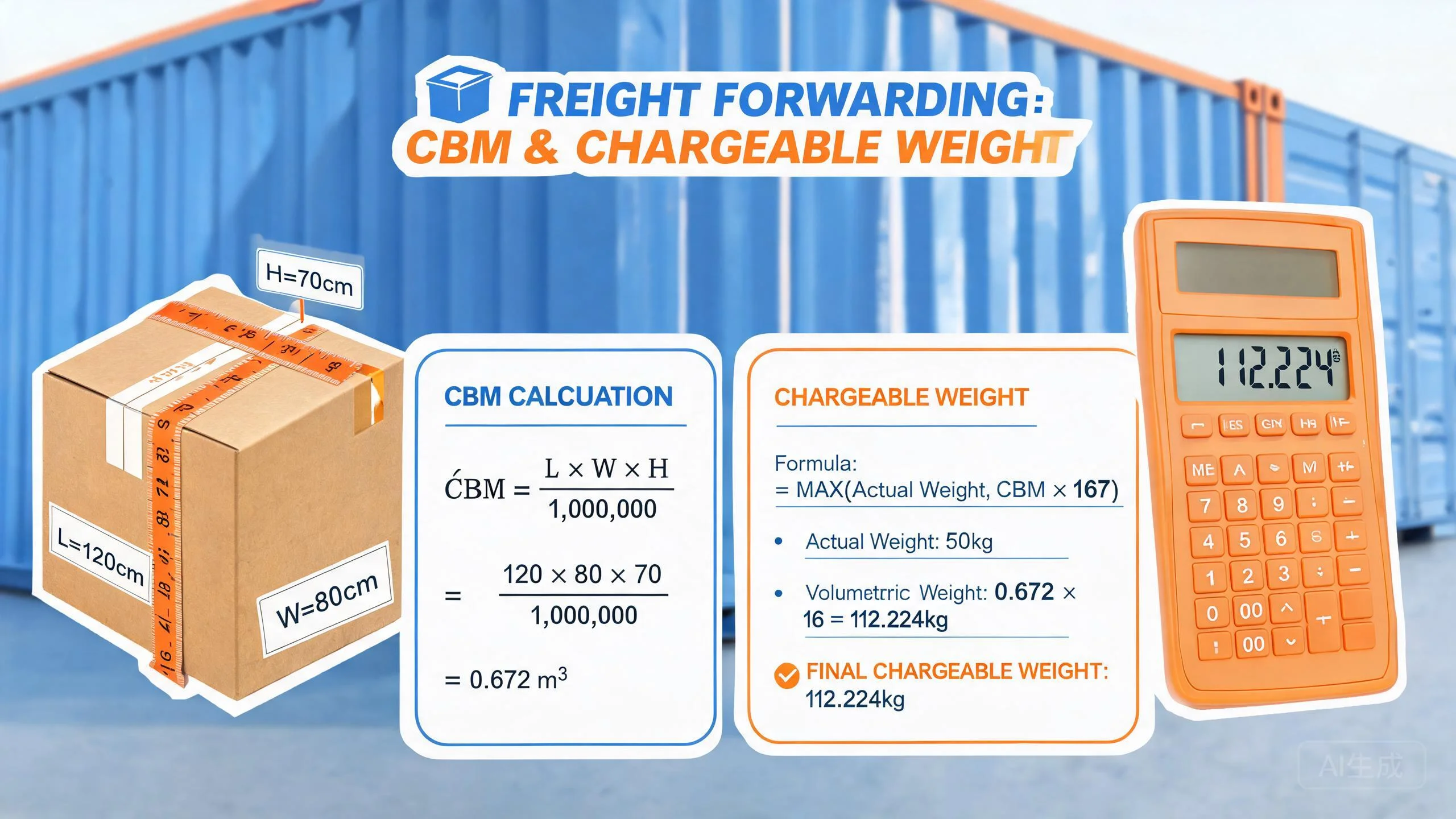
Before any routing discussion, run the value-versus-freight test. The physics of freight work against low-value returns: chargeable weight — the greater of actual weight and volumetric weight, as explained in our CBM and chargeable weight guide — means bulky, light goods pay for the space they occupy, not what they weigh. A carton of low-priced accessories can easily accrue freight, handling and clearance charges that exceed the entire recoverable value of the lot.
The qualitative checklist before committing to a return:
Make this a written decision per lot. "We always return everything" and "we never return anything" both destroy value in opposite directions.
Once the value test is done, the lot has four realistic dispositions. Compare them on the same lines before choosing.
| Option | Best when | Cost items to expect | Compliance points |
|---|---|---|---|
| Return to China | High unit value; rework or inspection only possible at home; brand/channel protection matters | Warehouse handling, inland haulage, export clearance, ocean/air freight, China re-import clearance per current China Customs rules | Accurate condition description on export invoice; original export documents available |
| Refurbish / rework overseas, then resell | Defect is fixable locally (packaging, minor repairs) and local demand exists | Warehouse labour, parts, relabelling, local fulfilment | Local product rules still apply to goods sold in-country |
| Local clearance resale | Sellable grade, functioning local channel, value does not justify freight | Discounted pricing, marketplace/channel fees, possible relabelling | Verify no brand or distribution restrictions on liquidation channels |
| Donate or dispose locally | Low value, bulky, damaged; refurbishment exceeds recoverable value | Disposal fees, possible donation documentation | Local waste and donation rules; documentation for write-offs |
Note the asymmetry: the first option moves the compliance burden to China's border, while the other three keep it in the destination country. Neither is automatically cheaper — price each per lot.---
The physical route has three legs, and the middle one decides the economics.
Leg 1 — warehouse to port or airport. Inland haulage from the 3PL to the gateway. If the goods have been sitting a long time, check the warehouse's storage terms first; the same logic that governs demurrage, detention and storage at ports applies to 3PL storage — idle days are billed continuously.
Leg 2 — consolidation. This is the single biggest cost lever. Returns rarely fill a container on their own. Consolidating several return lots — from different warehouses, channels or even different sister brands — into one export shipment spreads the fixed costs of freight and clearance across more cargo. The mechanics are the same as those used to consolidate samples and cargo from multiple China suppliers, run in reverse: one receiving point, one documentation set, one export declaration.
Leg 3 — international freight. The usual trade-offs:
| Mode | Cost profile | Speed profile | Suits |
|---|---|---|---|
| Ocean LCL | Lowest per unit for moderate volumes; longer transit and consolidation delays possible | Weeks; subject to sailings and transshipment | Most routine return lots |
| Ocean FCL | Fixed cost per container; becomes efficient once volume fills most of a container | Faster than LCL at the ports, fewer handling touches | Large single-lot returns or combined return + other cargo |
| Air freight | Highest cost; priced on chargeable weight | Days | High-value, low-density, urgent lots (e.g. goods needed for rework before a production run) |
Whichever mode you pick, treat the quote with the same line-by-line scepticism described in our freight quote vs invoice guide — return shipments attract the same family of surcharges and minimums as forwardings, and on low-value cargo those lines decide whether the return was worth it at all.
The China side is a declaration exercise, and it succeeds or fails on documentation created before the goods ever left China in the first place.
The pattern to avoid: goods exported years ago, original files archived, no bridge document explaining returns — then the lot arrives and every question becomes expensive.
Beyond the big decisions, three practical levers shape the final cost per unit:
Timing matters too. A return triggered by a quality dispute usually has a deadline — rework must finish before the next production run, or replacements must ship before the season. Map the return leg against that deadline first, then optimise cost; a cheap lot that arrives late protects nothing.
Two families of compliance risk sit on the export side, and both are cheaper to check before booking than after:
If the plan is a straight return to China, the checklist is shorter: accurate export documents, a reliable forwarder on the export leg, and a China broker who has seen the original export file before the goods sail.
Q: Is it ever worth shipping low-value e-commerce returns back to China?
Usually not. When freight, handling and clearance exceed the lot's recoverable value, local resale or disposal is the better economic answer. Returns justify the leg when unit value is high, rework is only possible at your China facility, or brand protection matters more than the freight cost.
Q: What documents does China customs require for re-importing returned goods?
Returns are declared under China Customs' current returned-goods regulations, which require documentation tying the returning goods to their original export — typically the original export declaration, commercial invoice and packing list, plus documents for the return leg (customs.gov.cn). Confirm the current documentary set with a China customs broker for your specific shipment.
Q: How long does the return routing usually take?
Ocean routings from the US or EU to China generally run in weeks, plus consolidation time at the warehouse and clearance at both ends. Air freight compresses the transit but not the documentation work. Actual times vary by lane, season and clearance.
Q: Can I mix returned goods with other cargo in one container?
Yes, and it is usually the cheapest way to move returns — consolidation spreads fixed costs across more cargo. The documentation must correctly describe each portion of the mixed load, so work with a forwarder who consolidates regularly.
Q: Do I pay duty again when returns re-enter China?
Returned-goods re-imports are handled under China Customs' current regulations for returned goods, which prescribe the applicable declaration channel and treatment; the specifics depend on your goods and how they qualify under those rules (customs.gov.cn). Have the treatment confirmed before departure rather than assuming.
Q: What is the first thing to do when a buyer refuses a B2B shipment?
Preserve the paperwork trail — the contract, the refusal notice and the condition evidence — and get the goods moved into a warehouse where they can be graded and consolidated. The disposition decision (return, refurbish, resell, dispose) should be priced per lot before anything ships.
Customs regulations and rates change. Confirm current requirements with the relevant customs authorities and qualified brokers before shipping. This article is operational guidance for logistics planning, not legal or tax advice.
If you are weighing a return-to-China decision on a US or EU warehouse lot and want the consolidation, export and re-import legs quoted as one plan with the document set reviewed up front, Baton Logistics — a Shenzhen-based freight forwarder — can price the full route before you commit.

Dec 15,2025
If you're a newly established company in the UAE planning to import goods from China and wants to know what are the best products imported to UAE from China. We will share with you the infomation you need step-by-step. China as the factory of th
Jan 02,2025
With global trade continuously growing, more and more companies in UAE are buying and shipping products from China to the UAE. Particularly in sectors like electronics, machinery, and fashion. And selecting the right shipping method
May 30,2024
Whether you're a small business or a multinational corporation, the efficiency and reliability of your supply chain depend greatly on the expertise and capabilities of your chosen freight forwarder.