
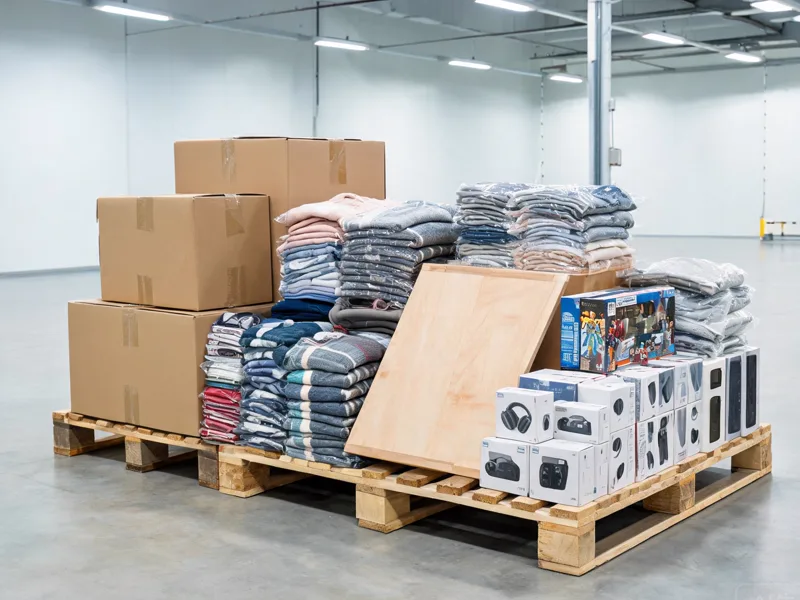
In short: Baitong Logistics adapts the shipping method, packaging rules and clearance approach to the product category rather than applying one service template. The categories we handle most often are consumer electronics and accessories, home and furniture, apparel and textiles, toys and juvenile products, and general e-commerce mixed cartons. For each we can state the typical pain points and the services used — and, equally important, the boundaries where a product needs a specialist we do not claim to be.
Two cartons of the same weight can need completely different handling. A lithium battery is a dangerous-goods question. A flat-pack wardrobe is a volumetric-weight question. A children's toy is a certification question. Apparel is a labelling and returns question. Treating them identically is how importers end up with a rejected booking, an unexpected dimensional charge or a customs hold.
The table below is the short version; the sections after it explain each category.
| Category | Typical pain point | Baitong approach | Boundary |
|---|---|---|---|
| Consumer electronics & accessories | Battery declarations, product compliance | Air or sea with correct battery documentation; consolidation; FBA prep | We do not issue product certifications |
| Home & furniture | Volumetric weight, damage in transit | FCL preferred; reinforced packing; LCL only where volume justifies | Oversized items need uplift approval for air |
| Apparel & textiles | Labelling rules, seasonality, returns | Air for in-season, sea for basic stock; relabelling in China; returns handling | Destination labelling rules are set by the importer's market |
| Toys & juvenile | Safety documentation, inspection risk | Document check before booking; consolidation; clearance support | We do not test or certify products |
| Mixed e-commerce cartons | HS code variety, mixed SKUs | Consolidation with itemised packing list; parcel or LCL depending on volume | Mixed hazardous goods cannot be consolidated without declaration |
The defining issue is batteries. Lithium cells and power banks are regulated dangerous goods when shipped by air, and the documentation requirement is not optional. Sea freight has different rules again. Before a booking is accepted we need to know whether the product contains a battery, what type, and the watt-hour rating.
Furniture and bulky homeware are usually less about weight and more about space. Charged on volume, a light sofa can cost more to ship than a dense pallet of tiles. This is where FCL becomes cheaper than LCL sooner than importers expect.
Apparel has the shortest selling season and the highest return rate of the categories here, which changes both the mode and the destination plan.
The constraint is documentation, not freight. Safety standards differ by market, and an incomplete certificate is a customs question rather than a carrier question.
Mixed cartons containing several SKUs are the most common pattern for marketplace sellers and the most error-prone for customs, because each product line may carry a different HS code and duty rate.
Customisation in our usage means three specific things: the mode and routing are chosen per category, the handling work in China is chosen per product, and the documentation checklist is chosen per destination. It does not mean we become a product compliance consultancy, a testing laboratory or a customs lawyer. Stating that boundary is what makes the rest of the service credible.
Include the product category, whether it contains a battery or liquid, the HS code if known, and the destination market's documentation requirements in your enquiry to overseas02@batongls.com or WhatsApp +86 191 2930 8513. That single paragraph usually determines the right mode before any rate is quoted.
Related reading: Amazon FBA from China, air freight, customs clearance, shipping for small businesses.
Where the applicable air and sea rules permit carriage and the goods are correctly declared and packed. Battery type and watt-hour rating must be provided before booking. Undeclared batteries are not accepted.
No. We check that required documents are present before booking and support clearance, but safety testing and compliance certificates must come from an accredited testing body.
Usually FCL ocean freight, because furniture is charged on volume and a full container spreads the cost across more pieces. LCL is viable for trial orders or mixed loads.
Yes. Relabelling, care-label application and marketplace-specific labelling can be done at a China warehouse before departure, which avoids rework after arrival.

Dec 15,2025
If you're a newly established company in the UAE planning to import goods from China and wants to know what are the best products imported to UAE from China. We will share with you the infomation you need step-by-step. China as the factory of th
Jan 02,2025
With global trade continuously growing, more and more companies in UAE are buying and shipping products from China to the UAE. Particularly in sectors like electronics, machinery, and fashion. And selecting the right shipping method
May 30,2024
Whether you're a small business or a multinational corporation, the efficiency and reliability of your supply chain depend greatly on the expertise and capabilities of your chosen freight forwarder.





 Email:


