Direct Answer# Shipping Lithium Batteries, Cosmetics and Food from China: A Multi-Category Compliance Matrix (2026)
Quick answer: These three categories fail for different reasons, so a single "sensitive cargo" label is useless. Lithium batteries fail on dangerous-goods classification, packaging and documentation — air is tightly constrained, sea is often the practical base. Cosmetics fail on product compliance, ingredient/label rules and importer qualification. Food fails on quarantine, shelf life and labelling. Before booking, identify which gate applies to your SKU and confirm the current rules with the destination authority — nothing here overrides an official requirement (dangerous-goods handling).
Key takeaways
- Different gates, different fixes. Transport class (batteries), product regulation (cosmetics), and quarantine (food) are separate systems.
- Feasibility is lane- and carrier-specific. "Can it fly?" depends on the exact product, packaging and current carrier rules — never assume.
- Documents are category-specific. A generic commercial invoice is not enough for any of the three.
- Packaging is part of compliance for batteries and often for food; it is not just damage protection.
- The destination authority always controls. Confirm current rules with IATA/IMO-based carriers and the relevant customs, food or medicines regulator.
- Lithium detail lives in a dedicated guide — this article only places it in the matrix (lithium air shipping).
How to read the feasibility matrix
Feasibility below is a relative indication, not a permission. For each SKU you must confirm:
- Classification — does the product fall under dangerous goods, food, cosmetic or medicated-cosmetic rules?
- Mode rules — what do the current IATA/IMO-based carrier rules and the destination authority allow?
- Documentation — which declarations, test summaries, certificates and labels are required?
- Channel — can the carrier, courier or destination post accept it at all?
When in doubt, treat the stricter mode as the constraint and verify in writing. Costs also differ sharply; normalize to landed cost, not just the freight rate (landed-cost framework).
The three-category compliance matrix
| Category |
Sea feasibility |
Air feasibility |
Core documents |
Packaging focus |
Main channel restriction |
| Lithium batteries |
Usually the practical base; DG rules still apply |
Tightly constrained by current air rules; many configurations restricted |
DG declaration, test summary, MSDS, accurate labels |
Short-circuit protection, strong outer packaging, correct marks |
Not all carriers/couriers accept; check current acceptance |
| Cosmetics |
Commonly feasible |
Commonly feasible |
Ingredient data, product information, label artwork, importer details |
Leak-proof, tamper-evident, temperature where relevant |
Products must meet destination cosmetic rules; importer qualification may apply |
| Food |
Commonly feasible |
Feasible for many shelf-stable items |
Health/phytosanitary documents where required, ingredient and label data |
Sealed, pest-proof, shelf-life and temperature control |
Quarantine/biosecurity rules vary by country and product |
Indicative only. Confirm current rules with the destination authority and carrier; this is not a permitted-item list.
Lithium batteries: where the dedicated guide applies
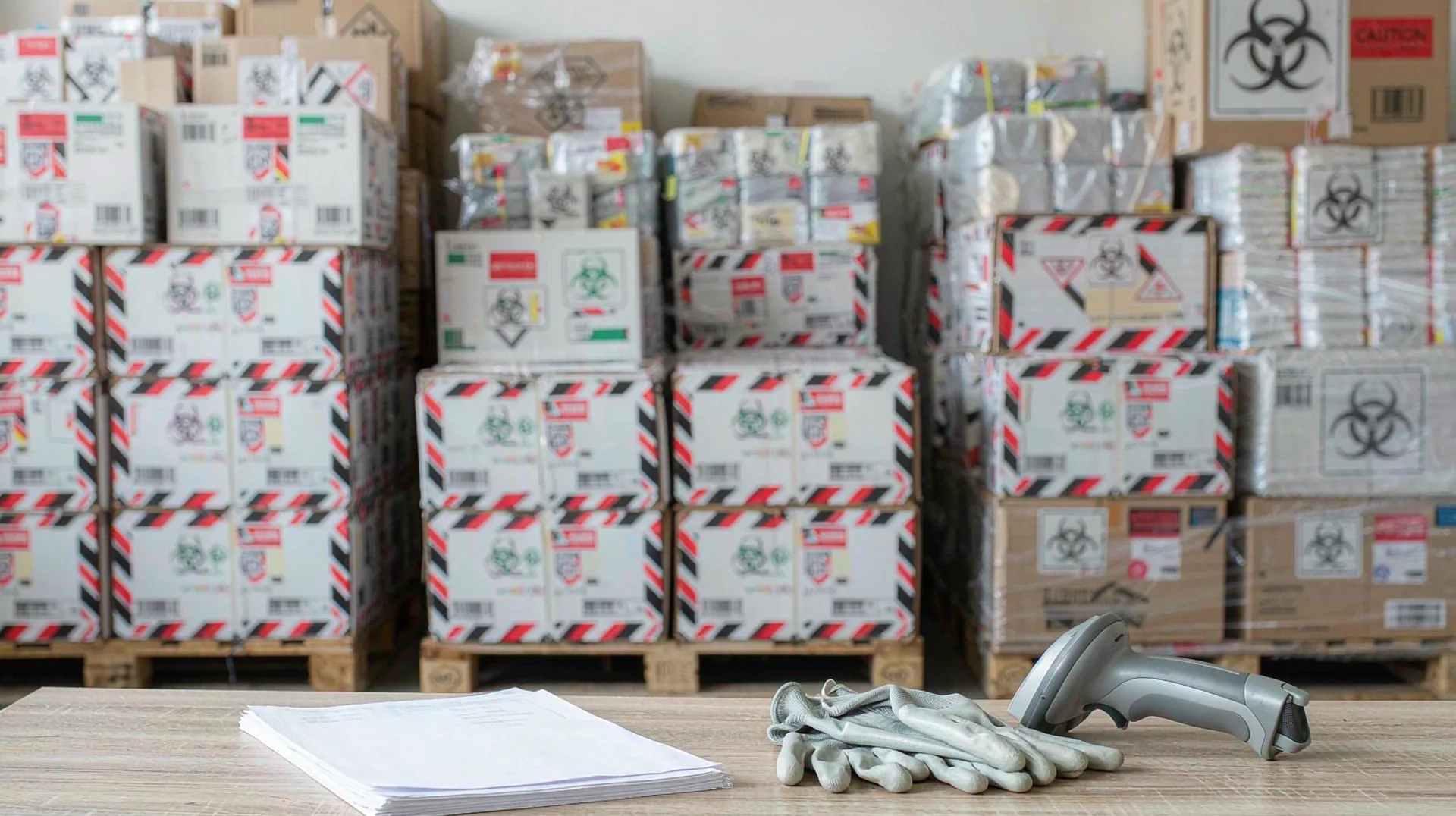
Lithium batteries are a transport-classification problem first. Whether a cell or battery can move by air or sea depends on its chemistry, configuration, state of charge and packaging under current rules. The detailed UN38.3 test-summary and packing-instruction requirements are covered in the dedicated lithium air-shipping guide — this article does not repeat them.
For matrix purposes, remember three points:
- Air is the constrained mode. Many lithium configurations face strict current limits; verify with the carrier before quoting.
- Sea is often the base case, but dangerous-goods rules and declarations still apply (dangerous goods).
- Misdeclaration is the fastest route to rejection and liability. Describe the product accurately; never hide battery content.
If a battery is inside equipment, the rules can differ from shipping batteries alone — classify the actual configuration.
Cosmetics: documentation and channel gates
Cosmetics are a product-regulation problem, not mainly a transport one. The freight is usually straightforward once the product is compliant.
Typical gates to check with the destination authority:
- Product notification/registration — some markets require a cosmetic product to be notified or registered before import.
- Ingredient restrictions — certain ingredients are limited or prohibited; confirm against current lists.
- Labelling — ingredient list, country of origin, expiry/period-after-opening and importer details are commonly required.
- Importer qualification — the importer may need a specific licence or responsible person.
- Special categories — "medicated" or claims-bearing products can fall under medicines rules, which are stricter.
Some destination markets add their own product conformity schemes; for example, Gulf markets may require specific product-approval steps — confirm current requirements for the market (Saudi SABER/SASO documents). Do not assume a product lawfully sold domestically is importable elsewhere.
Food: quarantine, shelf life and labelling
Food is a quarantine-and-shelf-life problem. Transport is usually feasible; market access is the hurdle.
- Biosecurity/quarantine — many countries restrict or require treatment/certification for plant and animal products. Requirements differ sharply by product and origin (Australia shipping & quarantine).
- Health certificates — certain foods require official health or phytosanitary documents.
- Shelf life — check remaining shelf life on arrival; some markets set minimums.
- Labelling — ingredient list, allergens, net weight, origin and date marking are commonly required.
- Temperature control — if the product needs it, confirm the cold-chain capability end to end.
Food and cosmetics can both be refused at destination for labelling defects even when the goods themselves are fine. Treat the label as part of the product, not a finishing touch.
Packaging and declaration differences
| Requirement |
Lithium batteries |
Cosmetics |
Food |
| Outer packaging |
Strong, rigid, with required marks |
Secure, leak-proof |
Sealed, pest-proof, often food-grade |
| Inner protection |
Prevent short circuit and movement |
Prevent breakage and leakage |
Prevent crushing and contamination |
| Temperature |
Not usually, but check chemistry |
Sometimes for sensitive formulations |
Often critical for perishables |
| Key declaration |
DG declaration + test summary |
Product/ingredient and label data |
Health/phytosanitary where required |
| Labelling on carton |
DG marks and handling labels |
Product identification |
Shelf-life and storage marks |
Confirm the exact requirement set for your SKU; a generic packing standard will not satisfy all three categories (chargeable weight for how packing volume also affects cost).
Common rejection reasons
| Symptom |
Likely cause |
Preventive action |
| Cargo refused at origin |
Wrong DG class or missing test summary |
Classify correctly; prepare documents before delivery |
| Held at destination customs |
Incomplete or inaccurate product data |
Supply full, correct invoice, labels and certificates |
| Quarantine hold |
Missing health/phytosanitary document or treatment |
Confirm destination requirements before shipping |
| Label non-compliance |
Wrong language, missing ingredients or origin |
Validate artwork against current rules |
| Carrier will not accept |
Category restricted on that lane/mode |
Confirm acceptance in writing before booking |
| Shelf-life failure |
Too little remaining life on arrival |
Check production and arrival dates; set a policy |
A practical rule: the cheaper the surprise, the earlier you find it. Verify category gates before goods leave the factory, not at the port.
Category-onboarding checklist
- [ ] Classify each SKU: dangerous goods, cosmetic, food, or a regulated overlap.
- [ ] Confirm current destination rules with the official authority — not from memory.
- [ ] Check carrier/courier acceptance for the exact mode and configuration.
- [ ] Prepare category-specific documents before goods leave the factory.
- [ ] Validate label artwork against current ingredient/origin/date rules.
- [ ] Specify category-appropriate packaging and markings.
- [ ] Confirm importer qualification and who is importer of record.
- [ ] Agree the Incoterm and responsibility split in writing.
- [ ] Build landed cost including compliance and possible rework (quote differences).
- [ ] Keep a per-SKU compliance file with current evidence and dates.
FAQ
Which of the three is hardest to ship by air?
Lithium batteries, because current air rules restrict many configurations. Cosmetics and many shelf-stable foods are often feasible by air.Can all cosmetics be shipped internationally?
No. Product rules, ingredient limits, labelling and importer qualifications vary by market. Confirm with the destination authority.Do food shipments always need a health certificate?
Not always, but many products or origins do. Confirm current health/phytosanitary requirements for your product and destination.What is the most common cause of rejection?
Incomplete or inaccurate data — classification, documents or labels — rather than the freight itself.Is sea freight always easier for sensitive goods?
Often more feasible than air for batteries, but customs and quarantine still apply. "Easier" does not mean "unregulated."Can I declare a product as "general goods" to simplify?
No. Misdeclaration creates rejection and liability. Describe the actual product accurately.Does packaging affect compliance?
Yes — for batteries it is part of the rules, and for food/cosmetics it affects condition and labelling. It also affects chargeable volume.Who is responsible for destination compliance?
That depends on your Incoterm and importer-of-record setup. Define it in writing before shipping.Does a product approved at home automatically clear abroad?
No. Market approvals are territorial; check the destination's own rules.Where do I find the detailed lithium-battery air rules?
In the dedicated lithium air-shipping guide; this article only places batteries within the comparison.
Sources
- IATA Dangerous Goods Regulations and ICAO technical instructions — current air rules for lithium batteries; IMO/IMDG guidance for sea carriage.
- Relevant national authorities (customs, food, medicines/cosmetics regulators) and EU Commission guidance — current product, labelling and import requirements.
- Baton Logistics, "Air Shipping Lithium Batteries & Power Banks from China," "Dangerous Goods Handling," "Shipping China to Australia," "Saudi SABER/SASO Import Documents," "Landed Cost Framework" — category handling and cost context.
This guide is general information, not legal, customs or regulatory advice. Rules for dangerous goods, cosmetics and food change — always verify current official requirements for your product and destination. Baton Logistics is an independent China freight forwarder and NVOCC; it is not a licensed customs broker, food or cosmetics regulator, tax adviser or surety, and nothing here guarantees acceptance, clearance or delivery.
Check your category before you ship
Tell us the product, destination and lane, and we will outline the workable modes, document list and responsibility scope. Contact overseas02@batongls.com or WhatsApp +86 191 2930 8513.