
Door-to-Door Shipping From China To The World
Recently, shipping companies have released the first half of 2020 performance report.
Most shipping companies have achieved extraordinary growth. HMM ended 5 consecutive years of losses and recorded a profit in the second quarter. ONE's net profit in the first quarter surged nearly 32 times compared with the same period last year, and Yixing Shipping achieved the best performance in the second quarter in 10 years. Maersk, Haberot, OOCL, Haifeng and other companies have all experienced an almost overall increase in their profitability in the extraordinary first half of 2020.
Outbreak hit, especially in the second quarter, the world is more closed state, and in the early stage of the outbreak, the shipping company based on the pessimistic expectations of capacity and a large number of idle capacity, low demand and thus led to a decline in volumes, but from the above results, we can see most of the shipping company is profitable.
The reasons are as follows: first, liner companies that allocate more capacity than the industry average on European and American routes benefit from the increase of spot market freight rates; Second, the collapse of oil prices and lower fuel prices have greatly reduced the operating costs of liner companies.
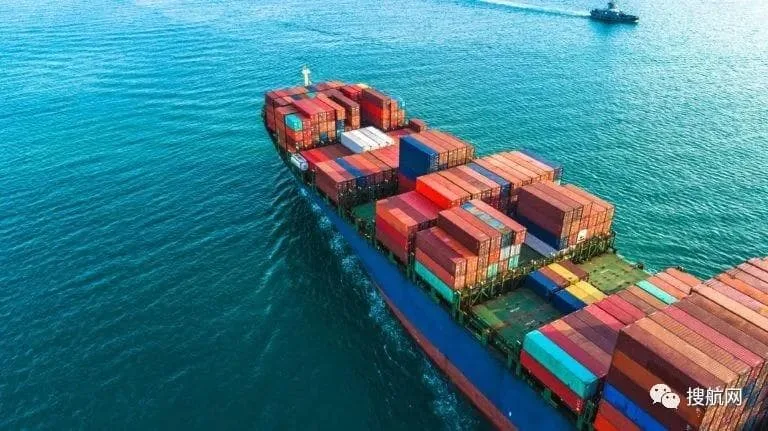
With a lot of idle capacity, the shipping company's capacity has declined
In the first half of the year, at the height of the coVID-19 outbreak, falling demand for cargo forced a spate of suspensions, set a record for container idle capacity around the world, and most of the leading shipping companies reduced their fleets and withdrew their ships from the market.
Gathering demand is highly relevant to the global economy and international trade.Global volumes fell 7.7 per cent in the first five months of the year, the first decline since 2010, according to CTS data.According to Alphaliner, global demand for containerized transport is projected to decline 7.6 percent in 2020 compared to the same period last year.Despite the weak volume in the first five months of the year, many countries have seen their economies restart since June, with a strong recovery driven by pent-up demand.
maersk
Despite the novel Coronavirus epidemic that has had a serious impact on global trade, Maersk has made a good start, continued its strategic transformation and demonstrated strong ability to withstand crises.Its shipping business saw EBITDA rise 25 per cent to $1.2bn in the first quarter, although more than 90 flights were grounded during the quarter, leading to a 3.5 per cent drop in average deployed capacity.
Maersk's second-quarter revenue fell 6.5 per cent to $9bn, hurt by a 16 per cent drop in Ocean volumes and a 14 per cent drop in portal terminal volumes.Through flexible capacity deployment, multiple cost saving measures and timely adaptation to changing customer needs, the profitability of each business has been improved.
Cma CGM
Cma's second-quarter earnings rose sharply, helped by capacity management.Cma reported revenue of $7.19 billion in Q1, down 3 percent from $7.41 billion in the same period last year, as cargo volume dropped 4.6 percent in the first quarter due to a drop in demand due to the coronavirus pandemic.
Operating profit in the second quarter was $1.2bn, up 26 per cent from a year earlier, and CMA said the improvement was largely due to a stronger freight market and lower chartering costs.In the second quarter, shipping volume fell 13.3% from a year earlier, while revenue fell 10.9% to $5.3 billion.
In the first half of this year, Haberot's revenue was $7.05 billion, down less than 1% from $7.047 billion in the same period last year.In response, Mr Haeperot explained that the fall in revenues was mainly due to a fall of about 4 per cent in shipments to about 5.8m TEU.
Despite a slight increase in shipments in the first quarter, shipments in the second quarter were down about 11 percent from the same period last year due to the outbreak.Average freight rates, meanwhile, rose slightly in the first half of the year to $1,104 per TEU.
ONE
According to the financial disclosure, ONE completed 2.673 million TEU in the first quarter, with an average fuel price of $348, down 20% from the same period in the previous fiscal year.
By route, the east coast of Asia and North America has a volume of 610,000 TEU, 59,000 TEU less than that of the previous fiscal year. The utilization rate of shipping space is 96%, higher than that of 86% in the previous fiscal year.
The west route between Asia and Europe has a volume of 347,000 TEU, 113,000 TEU less than the same period last year, and 96% utilization rate of shipping space.
The volume of containers on the westbound route from Asia to North America fell by 6.57% year-on-year to 327,000 TEU.
Eastbound traffic from Asia to Europe decreased by 10.22% to 290,000 TEU.
Matson ship
For the first half of the year, Mercer reported net income of $36.6 million, up 18.4% from the same period last year, to total revenue of $1.038 billions
Container throughput on the main Hawaii route was down 4.0% year on year;
In Guam, container volumes on the route fell 12.5 per cent in the second quarter of 2020 due to reduced demand for retail-related goods.
In Alaska, container volumes fell 9.0% in the period compared with the same period last year.
For the China side of the business, volume increased by 68.1% during the period, mainly due to increased volume of new "CLX+" route services, chartered flights and CLX route services in the second quarter.
According to financial data released for the first half of the year, average freight rates are higher than a year ago, although volume and revenue are generally lower.As the market picks up, liner companies are gradually freeing up capacity to support container cargoes.
Looking ahead to the second half of the year, as the market uncertainty is still greater, therefore, the industry on the liner company's performance forecast, optimistic cautious.

Dec 15,2025
If you're a newly established company in the UAE planning to import goods from China and wants to know what are the best products imported to UAE from China. We will share with you the infomation you need step-by-step. China as the factory of th
Jan 02,2025
With global trade continuously growing, more and more companies in UAE are buying and shipping products from China to the UAE. Particularly in sectors like electronics, machinery, and fashion. And selecting the right shipping method
May 30,2024
Whether you're a small business or a multinational corporation, the efficiency and reliability of your supply chain depend greatly on the expertise and capabilities of your chosen freight forwarder.









 Email:


