
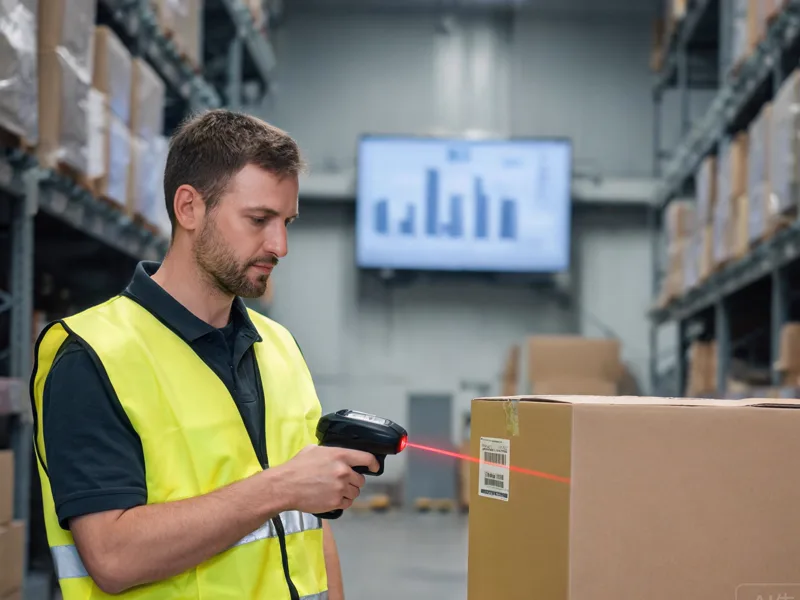
In short: Baitong Logistics runs its shipments on three practical layers of technology: a customer-facing tracking portal (BR1express) that shows shipment milestones, warehouse systems that keep inbound, stored and outbound inventory visible, and operational reporting that turns carrier and clearance events into written updates. We describe these as working tools with defined limits rather than as an "AI-powered platform", because a freight buyer needs to know what data they will actually receive and how often.
Logistics marketing is full of "smart", "intelligent" and "end-to-end visibility". Those words tell a buyer nothing about whether they will know where their container is on a Thursday afternoon. The useful questions are narrower: what events are captured, how quickly, in what format, and what happens when an event does not arrive.
This page answers those questions for the tools we actually use.
| Element | What it does | Practical limit |
|---|---|---|
| BR1express portal | Look up a shipment by booking reference, container number or air waybill and see the latest recorded milestone | Reflects the last event reported by the carrier or agent, not a continuous GPS position |
| Ocean milestone capture | Booking, gate-in, load, departure, transhipment, arrival, discharge, clearance, delivery | Carrier event feeds vary in frequency; a relay port can show no change for several days |
| Air milestone capture | Booking, uplift, departure, arrival, clearance, delivery | Air events are frequent but final-mile events depend on the destination agent |
| Parcel events | China export scan, international line-haul, destination delivery scan | Postal networks do not scan at every hop; gaps of 7–14 days can be normal |
| Exception flag | Moves the file out of normal tracking into the exception process | Requires a human confirmation of cause before an explanation is sent |
Visibility matters most before departure and after arrival, because that is where goods sit still and discrepancies appear.
Data only helps if it arrives in a form a buyer can act on. In practice that means three report types:
| Report | Content | Typical cadence |
|---|---|---|
| Shipment status | Milestones reached, next expected event, open exceptions | On event, plus a written update while an exception is open |
| Exception report | Root cause, timeline, recovery options with cost and time impact | Within 48 hours of a delay exceeding the quoted window |
| Volume and cost summary | Shipments by lane and mode, charges by cost element | Agreed per account, typically monthly |
This is the area where overclaiming is most common, so it is worth being direct.
We do not publish a list of integration standards we have not verified for your setup. The honest position is that portal and email reporting are available now, and deeper integration is a scoped conversation.
The value of the system is that it shortens the time between something going wrong and someone who can act knowing about it.
Tell us who needs the updates, how often, and in what format — email, messaging or a portal login — at overseas02@batongls.com or WhatsApp +86 191 2930 8513. For accounts with system requirements, ask specifically for a scoping conversation rather than a brochure.
Related reading: the full tracking guide, warehousing and consolidation, transit times and delay handling.
Yes. Shipments are tracked through the BR1express portal by booking reference, container number or air waybill, alongside written milestone updates from a named account contact.
Portal access and written milestone reporting are available as standard. System-to-system integration is project-specific and must be scoped and confirmed in writing with your account manager before you depend on it.
No. It shows the last event reported by the carrier or destination agent — booking, departure, transhipment, arrival, clearance, delivery — rather than continuous position data.
Stored inventory is recorded by SKU and location, and stock position can be reported for accounts using the São Paulo or Uruguay facilities. The reporting cadence is agreed per account.

Dec 15,2025
If you're a newly established company in the UAE planning to import goods from China and wants to know what are the best products imported to UAE from China. We will share with you the infomation you need step-by-step. China as the factory of th

Jan 02,2025
With global trade continuously growing, more and more companies in UAE are buying and shipping products from China to the UAE. Particularly in sectors like electronics, machinery, and fashion. And selecting the right shipping method
May 30,2024
Whether you're a small business or a multinational corporation, the efficiency and reliability of your supply chain depend greatly on the expertise and capabilities of your chosen freight forwarder.





 Email:


