
Door-to-Door Shipping From China To The World
Quick answer: Exhibition cargo moves under temporary admission rules, not ordinary export rules. Your three practical routes are an ATA Carnet, temporary import under a customs security (deposit or bond), and formal permanent import followed by re-export. The right choice depends on the destination country, whether any exhibits will be sold or given away, and how tight your teardown-to-vessel window is. Getting the route wrong is the most common reason exhibition cargo is held at arrival or cannot leave the show country without penalties.
This guide is written for exhibitors, stand builders and marketing teams shipping booths, machines and demo units from China — the route decision, the document set, the outbound and return timelines, and what to do when a show overruns.
Most countries treat exhibition goods as temporary admission: the goods enter duty-free or duty-suspended because they will leave again within a set period.
Three consequences follow:
The three routes below all solve the same problem — proving to customs that the goods will leave — with different guarantees and different paperwork.
| Route | Best for | Guarantee form | Documents typical | Main caveat |
|---|---|---|---|---|
| ATA Carnet | Multi-show tours, high-value exhibits, countries that accept carnets | International guarantee chain via issuing chamber | Carnet + general list; usual shipping docs | Goods must re-export within carnet validity; scope and rules vary by country |
| Temporary import under security | Destinations without carnet coverage, or goods with restricted carnet categories | Cash deposit or customs bond lodged with destination customs | Temporary import declaration, security receipt, detailed packing list | Deposit refunded only after proof of re-export; process handled by local broker |
| Permanent import + re-export | Exhibits partly sold, or destinations where temporary procedures are cumbersome | Full import duty/tax paid up front | Commercial invoice, import declaration, then export declaration for what leaves | Costliest up front; refunds depend on the country |
There is no universally "best" route. A single show in a carnet country with one return date points to a carnet; a country outside the carnet system, or a tour with sales planned, points to one of the other two.
An ATA Carnet is an international customs document — often described as a "passport for goods" — covering temporary admission backed by a guarantee issued through the chamber system. In China, carnets are issued via the CCPIT chamber system; elsewhere, local chambers issue them under the international guarantee chain.
How the cycle works in practice:
Two carnet facts decide outcomes more than anything else:
The general list is the backbone of the whole operation. Every package that crosses a border must map back to it.
Practical rules that prevent the classic failures:
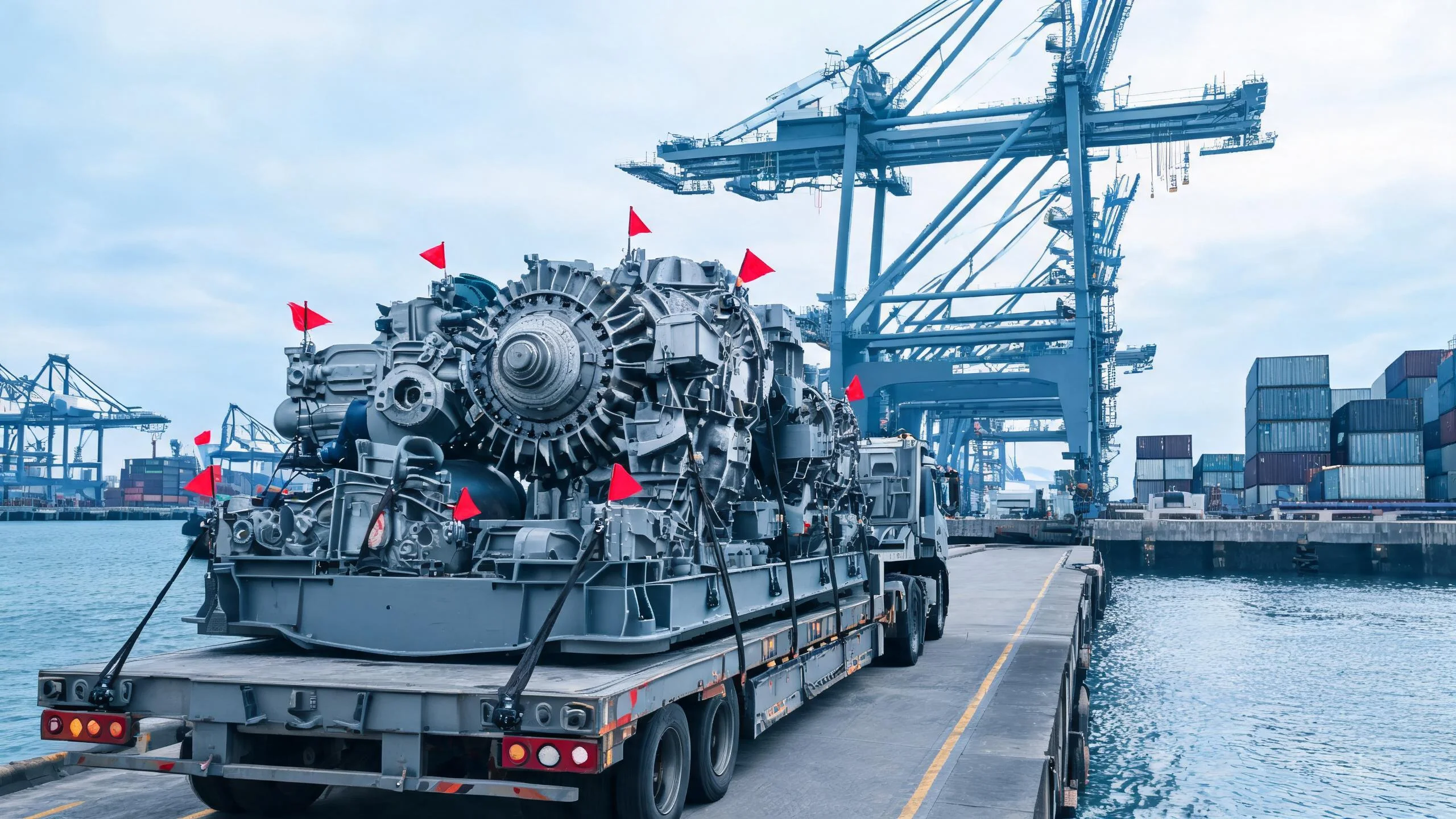
For large exhibits — full machine bodies, oversized booth structures, vehicles — add the planning points in our guide to shipping oversized machinery from China: lifting points, road permits at both ends, and vessel space for non-standard dimensions.
Exhibition logistics are schedule-driven from the show date backwards. A workable planning sequence, using relative weeks:
| When (relative) | What happens |
|---|---|
| 8–12 weeks before the show | Confirm the route (carnet / security / permanent import), apply for the carnet if used, book vessel or air space, confirm venue handling rules and crate storage |
| 4–6 weeks before the show | Cargo packed and general list finalized; export customs formalities; cargo departs China |
| 2–4 weeks before the show (sea) | Cargo arrives at destination port; import formalities under the chosen route; delivery to venue within the venue's build-up windows |
| 1–2 weeks before the show (air) | For late-critical items, air freight is the fallback — check chargeable weight economics before committing |
| Build-up week | Venue delivery, unpacking, installation; empty crates moved to venue storage |
The two hard constraints are the vessel transit time and the venue's build-up window. Working backwards from "stand ready for inspection on day one" is the only reliable method. Before committing budget, get the full cost picture — the line items on a China quotation are dissected in our guide to reading a freight quotation.
The return leg is where carnet and temporary-import shipments actually succeed or fail. The sequencing to protect:
Timing risk is real: after a major show, venue-to-port trucking and export space tighten for everyone leaving at once. Book the return leg before the show opens, not after teardown.
Show overruns, sold exhibits, damaged machines and missed sailings all create the same problem: goods still in the country after the admission window. The realistic options:
| Situation | Possible options | What to check first |
|---|---|---|
| Partial sale of exhibits | Convert sold items to permanent import (pay applicable duties), re-export the rest | Whether the destination allows conversion mid-admission |
| Admission window expiring | Apply for an extension of the temporary admission period | Extension rules of the destination customs and carnet issuing rules |
| Goods damaged and abandoned | Formal abandonment or destruction under customs supervision | The destination's procedures and cost consequences |
| Complete overrun, no action possible | Regularize the import (duties/taxes as applicable) and accept the guarantee claim process on a carnet | Contact the issuing chamber immediately — early communication matters |
The general principle: a discrepancy between what entered and what leaves is solvable if declared deliberately, and expensive if discovered by customs first. In our customs clearance operations, early notification of the destination broker is the single highest-value action when a show plan changes. The same logic applies on the China side, where the mechanics of holds are set out in our guide to why shipments get stopped by Chinese customs.
| Question | If yes | If no |
|---|---|---|
| Is the destination country covered for your goods category under the carnet system? | Carnet is usually the cleanest route | Use temporary import under security, or permanent import |
| Will any exhibits be sold, consumed or given away? | Split the shipment: temporary admission for returning goods, duty-paid entry for the rest | Single temporary admission shipment is simpler |
| Multiple shows in different countries? | One carnet can cover repeated movements across members, subject to validity | Re-issuing per country is slow — carnet strongly preferred |
| Very low-value or single-use display materials? | Permanent import may cost less than carnet issuance fees and procedure overhead | Carnet or security route preserves duty-free status |
| Tight teardown-to-departure window? | Pre-book return trucking/vessel and pre-lodge the re-export declaration | Same advice applies — the window is always tighter than planned |
Q: What is an ATA Carnet and when should a Chinese exhibitor use one?
It is an international customs document, issued through the chamber system (in China via CCPIT), that allows temporary admission of goods into member countries without paying import duties at each border, provided the goods re-export within the carnet's validity. It suits multi-country show tours and high-value exhibits. Member coverage, eligible categories and fees follow the issuing chamber's and destination customs' current rules — confirm both before applying.
Q: Which countries accept ATA Carnets for exhibition goods?
Major show destinations including the United States, most European countries, and several Middle East markets commonly accept carnets, but the list of members and the treatment of specific goods categories are determined by each country's customs. Verify your destination and goods list with the issuing chamber and the destination customs authority.
Q: What happens if I sell an exhibit at the show?
Sold goods can no longer leave as temporary admission. The usual solution is converting those items to permanent import — declaring them and paying the applicable duties and taxes — while re-exporting the remaining exhibits. Handle this through the destination broker before departure rather than explaining it at the exit stamp.
Q: Can brochures and giveaway items go on the same shipment as the exhibits?
They can travel in the same container, but not on the same customs basis. Giveaways and items consumed at the show are typically subject to normal import duty and need their own declaration — keep them on a separate packing list from day one.
Q: How early should trade show cargo leave China before the exhibition?
For sea freight, plan arrival roughly two to four weeks before the build-up date so import formalities and venue delivery have margin; for air freight, one to two weeks is a common window. Lead times vary with route, season and venue schedules — confirm with your forwarder per show.
Q: What documents does the shipment need beyond the carnet?
The standard international set still applies: commercial invoice, packing list, bill of lading or air waybill, and any transport-specific certificates for the destination. The carnet or temporary-import declaration sits on top of these, not instead of them.
Temporary admission rules, carnet fees and admission windows change and vary by destination. Confirm current requirements with the issuing chamber and the destination customs before each show. If you are planning an exhibition shipment from China and want the route, general list and return leg reviewed before booking, Baton Logistics can map the full timeline with you.

Dec 15,2025
If you're a newly established company in the UAE planning to import goods from China and wants to know what are the best products imported to UAE from China. We will share with you the infomation you need step-by-step. China as the factory of th
Jan 02,2025
With global trade continuously growing, more and more companies in UAE are buying and shipping products from China to the UAE. Particularly in sectors like electronics, machinery, and fashion. And selecting the right shipping method
May 30,2024
Whether you're a small business or a multinational corporation, the efficiency and reliability of your supply chain depend greatly on the expertise and capabilities of your chosen freight forwarder.